Discovering the Traditional Crafts of Damascus: A Journey Through Syria’s Living Artisan Heritage
IntroductionDamascus is one of the world's oldest continuously inhabited cities, and its cultural identity has long been connected with the skilled hands of its artisans. The Ancient City of Damascus was historically an ...
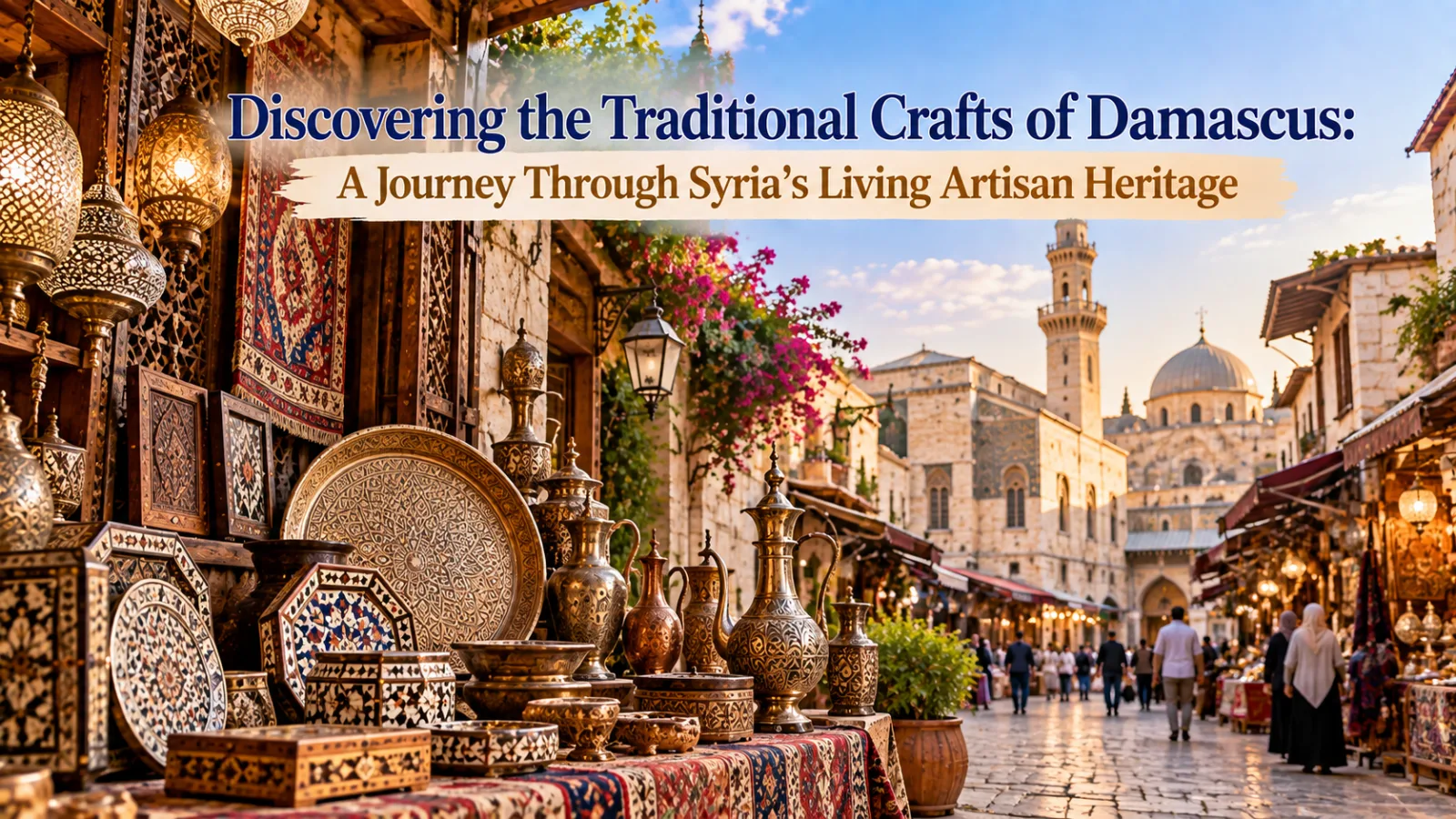
Discovering the Traditional Crafts of Damascus: A Journey Through Syria’s Living Artisan Heritage
Introduction
Damascus is one of the world's oldest continuously inhabited cities, and its cultural identity has long been connected with the skilled hands of its artisans. The Ancient City of Damascus was historically an important commercial center where crafts such as swords, textiles, metalwork, and decorative arts flourished. UNESCO recognizes the city's long history and its role as a crossroads between different regions of the Middle East.
Today, exploring the traditional crafts of Damascus offers travelers a different way to understand the Syrian capital. Instead of simply visiting monuments, you can enter small workshops, watch craftsmen shape wood and metal, admire intricate textiles, and discover techniques passed from one generation to another.
From shimmering mother-of-pearl mosaics to luxurious Damask textiles, Damascus crafts reveal a culture built around patience, precision, and extraordinary attention to detail.
Why Explore Damascus Crafts?


A craft workshop can tell a story that a museum object sometimes cannot.
You can see the raw materials, observe the tools, and watch an artisan gradually transform simple pieces of wood, shell, metal, or fabric into a finished object.
Damascus is particularly famous for several traditional crafts, including:
Mother-of-pearl wood inlay
Damask silk and brocade
Copper and brass work
Ajami decorative painting
Hand-blown glass
Mosaic
Traditional textiles
Damascene rose products
Decorative metalwork
These crafts form part of a broader Syrian artisan tradition that remains connected to family workshops, apprenticeships, local markets, and historic souqs.
1. Discover Damascus Mother-of-Pearl Inlay


Perhaps the most recognizable Damascus handicraft is intricate wood inlaid with mother-of-pearl.
Artisans combine materials such as mother-of-pearl, bone, ebony, and contrasting woods, often creating geometric, floral, and arabesque patterns. The pieces are individually cut and fitted into prepared wooden surfaces.
Traditional objects include:
Jewelry boxes
Chess and backgammon boards
Mirrors
Tables
Chairs
Cabinets
Decorative panels
Writing desks
The craftsmanship is immediately noticeable when viewed up close. Individual pieces form elaborate geometric compositions that can appear almost mathematical.
A well-made inlay should feel smooth and level rather than having obvious raised edges.
2. Learn How Damascene Mosaic Is Made
Damascene mosaic is closely related to the city's famous inlay tradition.
Artisans prepare bundles of differently colored wood and other materials, then cut them into thin sections to create repeating geometric patterns. These small elements can be assembled into boxes, furniture, trays, and decorative panels.
What makes the technique special is its precision.
From a distance, the finished surface can look like a single complex pattern. From close range, however, you can see hundreds of small individual components fitted together.
This is why visiting a workshop is so valuable. A finished box may look simple until you understand how many individual pieces were required to create its pattern.
3. Explore Damask Textiles and Brocade
The word damask itself is associated with Damascus.
Damask textiles became famous for their elaborate woven patterns, while traditional Syrian brocade uses silk and metallic threads to create richly decorated fabrics. Contemporary descriptions of Damascus crafts still identify brocade as one of the city's important textile traditions.
Traditional designs can feature:
Flowers
Birds
Geometric motifs
Arabesques
Repeating ornamental patterns
High-quality handwoven textiles can require considerable time and skill.
For visitors, a small piece of authentic fabric may be easier to transport than larger handicrafts and can make a meaningful cultural souvenir.
4. Visit Damascus Copper and Brass Workshops
Another fascinating tradition is handcrafted copper and brass work.
In the historic markets of Damascus, metalworkers have traditionally shaped and decorated trays, coffee pots, bowls, lanterns, and other household objects.
The process can involve hammering, engraving, polishing, and decorative detailing.
Look closely at handmade copperware and you may notice subtle hammer marks that reveal the human effort behind the object. The sound of metal being worked is also part of the atmosphere of Damascus's traditional artisan quarters.
For travelers interested in photography, a working copper workshop can be particularly atmospheric, with reflective metal surfaces, tools, patterns, and warm workshop lighting.
5. Discover Ajami Decorative Painting
Ajami painting is another distinctive Syrian decorative tradition.
It involves richly decorated surfaces featuring intricate floral, geometric, and ornamental compositions. Historically, Ajami decoration was used to embellish architectural interiors and furniture.
The technique is associated with Damascus and represents the city's long tradition of combining architecture, painting, ornament, and craftsmanship.
In contemporary craft demonstrations, visitors may encounter artists working on decorative panels and other surfaces using traditional motifs.
6. See Traditional Syrian Glassblowing
Traditional hand-blown glass is another craft connected with Syrian heritage.
Artisans heat glass until it becomes workable and then shape it using blowing, rotation, and specialized tools. Each piece can therefore have small variations that distinguish handmade glass from factory-produced objects.
Syrian traditional glassblowing has also received international heritage recognition; it was included on UNESCO's list of intangible cultural heritage in need of urgent safeguarding in 2023.
If you have the opportunity to see a glassblower at work, watch how quickly an apparently shapeless mass of molten glass becomes a recognizable vessel.
7. Learn About the Damascene Rose
The Damascene rose adds another fascinating dimension to Damascus's cultural heritage.
Although the main UNESCO-recognized practices associated with the rose are centered in Al-Mrah, in rural Damascus, the tradition is closely connected to the wider cultural landscape of the region.
UNESCO inscribed the practices and craftsmanship associated with the Damascene rose in 2019. Families traditionally handpick the roses in the morning and transform them into products including rose water, dried buds, syrups, jams, and other preparations.
The rose season typically begins in May, when families gather to harvest and process the flowers.
For travelers, rose products can be among the lighter and more practical cultural souvenirs associated with the Damascus region.
8. Explore the Souqs of Old Damascus
One of the best ways to discover Damascus crafts is simply to walk through the city's historic market districts.
Souq al-Hamidiyah and the surrounding khans are traditionally associated with textiles, inlay, decorative goods, and other crafts. Contemporary guides also identify historic market areas as places where visitors can encounter working artisan traditions.
Walking through the souqs is an experience in itself.
You may pass from a textile shop into a metalworking area, then discover a small store filled with carved wooden objects or colorful glass.
The narrow streets, historic architecture, scents, sounds, and workshops create an atmosphere that feels very different from a modern shopping mall.
9. Meet the Artisans Behind the Crafts
One of the most rewarding aspects of exploring Damascus handicrafts is learning about the people who make them.
Many traditional skills are taught through family transmission and apprenticeship. Historical documentation of Damascus intarsia workshops, for example, records craft businesses operating across generations and producing or restoring elaborate inlaid furniture.
When visiting a workshop, take a moment to ask:
How long has the workshop existed?
Who taught the artisan the craft?
How long does one piece take?
Which materials are used?
Which parts are made by hand?
Is the design traditional or contemporary?
The answers can transform a souvenir into a meaningful cultural story.
How to Recognize Quality Damascus Handicrafts
Not every product labeled "Damascus" is necessarily traditionally handmade.
When shopping, examine the craftsmanship carefully.
For Mother-of-Pearl Inlay
Run your fingers across the surface. High-quality inlay should be relatively smooth, with pieces fitted closely into the wood.
For Handwoven Textiles
Look at both sides of the fabric. Traditional weaving should show evidence of the construction and pattern rather than looking like a simple printed surface.
For Copperware
Look for subtle variations and hammer marks that indicate handworking.
For Glass
Hand-blown pieces often have small variations that make each object unique.
Most importantly, ask the artisan or seller about the production process rather than relying only on a label.
What to Buy in Damascus
If circumstances allow you to shop locally, some of the most interesting traditional souvenirs include:
Small mother-of-pearl boxes
Inlaid wooden trays
Backgammon boards
Handcrafted copper trays
Decorative glass
Damask textiles
Brocade fabric
Rose water
Dried Damascene rose products
Traditional decorative panels
For travelers concerned about luggage space, small boxes, textiles, and lightweight decorative pieces are usually easier to transport than large furniture.
Always check current customs and export regulations before purchasing antiques or culturally significant objects.
Best Time to Explore Damascus Craft Workshops
Craft workshops are primarily indoor experiences, making them less dependent on weather than hiking or outdoor sightseeing.
However, individual workshop schedules can vary considerably.
Morning visits can be a good choice because artisans may be actively working and the historic souqs can be less crowded than later in the day.
If you specifically want to photograph an artisan demonstration, ask permission first and confirm that photography is welcome.
Responsible Cultural Tourism
Traditional crafts are living cultural practices, not simply attractions created for tourists.
Visitors can help protect these traditions by supporting genuine artisans and treating workshops with respect.
Consider these simple principles:
Buy directly from artisans when possible.
Ask before photographing craftsmen.
Do not touch unfinished work without permission.
Avoid aggressively bargaining over labor-intensive handmade objects.
Ask about the origin of materials.
Do not purchase archaeological artifacts of uncertain provenance.
Support workshops that actively teach younger generations.
Choose quality handmade objects instead of mass-produced imitations.
Every responsible purchase can help keep traditional skills economically viable.
Important Travel Considerations
Damascus and Syria remain destinations where current security, entry requirements, transport conditions, and official travel advisories must be checked immediately before travel. Conditions can change, and access to particular neighborhoods or sites may be restricted.
If you plan a future visit, consult current government travel advice and local sources, and consider arranging cultural visits through reputable local professionals.
Final Thoughts
Exploring the traditional crafts of Damascus is a journey into a living part of Syrian culture.
From mother-of-pearl mosaics and ornate woodwork to copper engraving, silk brocade, glassblowing, Ajami decoration, and the traditions surrounding the Damascene rose, these crafts reveal the extraordinary skill and patience of generations of artisans.
The historic city of Damascus has been a crossroads of trade and culture for thousands of years, and its crafts reflect that history.
For travelers interested in authentic cultural experiences, a workshop visit can be far more memorable than simply purchasing a souvenir. Watch the hands, listen to the tools, ask about the tradition, and discover the story behind each handmade object.
Damascus is not only a city of ancient monuments. It is also a city where heritage continues to live through the hands of its craftsmen.