Experiencing Local Stone Carving Art in Taiwan: A Hands-On Cultural Journey
Introduction: Discover the Art of Stone Carving in TaiwanTaiwan is celebrated for its dramatic mountains, beautiful coastlines, lively night markets, and centuries-old temples. Yet beyond these familiar attractions lies ...
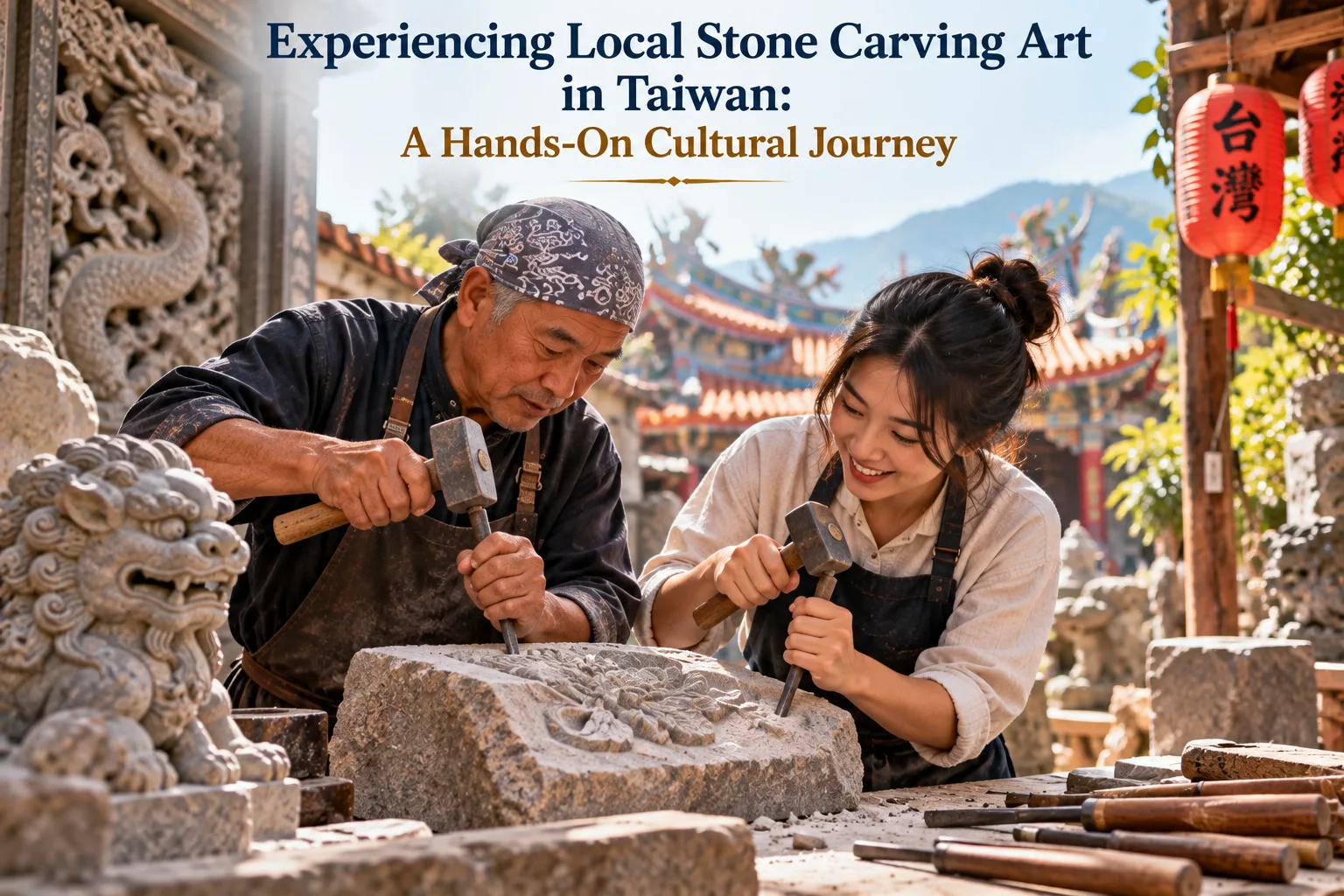
Experiencing Local Stone Carving Art in Taiwan: A Hands-On Cultural Journey
Introduction: Discover the Art of Stone Carving in Taiwan
Taiwan is celebrated for its dramatic mountains, beautiful coastlines, lively night markets, and centuries-old temples. Yet beyond these familiar attractions lies another fascinating part of its cultural heritage: the art of stone carving.
From intricate temple decorations to elegant marble sculptures, stone carving reflects the island’s artistic traditions, religious influences, and appreciation for natural materials. Every carved line and carefully shaped surface represents patience, skill, and a close relationship between the artisan and the stone.
For travelers seeking something more meaningful than ordinary sightseeing, participating in a local stone-carving workshop offers an opportunity to experience Taiwanese craftsmanship firsthand. Under the guidance of an experienced artisan, visitors can explore traditional tools, practice basic carving techniques, and create a small piece of artwork to take home.
Rather than simply observing an ancient craft, you become part of the creative process.
1. Understanding Taiwan’s Traditional Stone-Carving Heritage

Stone carving has long been part of Taiwan’s architectural and artistic landscape. Visitors can see intricate stonework in temples, historic buildings, memorials, and public sculptures. These works often feature dragons, guardian lions, floral patterns, auspicious symbols, and other decorative motifs influenced by Chinese artistic traditions.
Stone also holds a special place in Taiwan’s natural environment. The island is known for its varied geology, including marble and other ornamental stones, particularly associated with the eastern region around Hualien.
The craft itself requires more than physical strength. Artisans must understand the character of each material, recognize its natural grain, and decide how to remove stone without damaging the intended design. A small mistake can change the appearance of an entire piece.
Traditional craftsmanship continues to evolve as contemporary artists experiment with abstract forms, modern sculpture, and new approaches to displaying stone in homes and public spaces.
For visitors, learning about these traditions provides a richer understanding of how Taiwan’s natural resources, cultural influences, and artistic imagination intersect.
2. Joining a Hands-On Stone-Carving Workshop

The most memorable part of this experience is often the opportunity to work with your own hands.
A beginner-friendly stone-carving workshop typically starts with an introduction to the materials and tools. Your instructor may demonstrate how to hold a chisel, control a small hammer, and make shallow marks before attempting more complicated shapes.
The exact activities depend on the studio, the material, and the instructor’s teaching style.
What can you expect to learn?
Choosing a suitable stone: Understand why softer materials or prepared stone blanks may be more appropriate for beginners.
Using basic tools: Learn how different chisels create lines, grooves, and textured surfaces.
Sketching a design: Transfer a simple drawing onto the stone before beginning.
Practicing controlled carving: Work slowly to shape your design while learning how pressure and tool angle affect the result.
Finishing your artwork: Smooth selected surfaces and prepare your piece to display or take home, depending on the workshop.
You might create a small decorative tile, a simple geometric ornament, a flower motif, or a personalized keepsake. More elaborate sculptures generally require considerably more time and experience.
Is stone carving suitable for beginners?
Yes, provided you choose a workshop designed for first-time participants. You do not need previous artistic experience. Patience, careful listening, and a willingness to learn are more important than producing a perfect sculpture.
The goal is not to compete with a professional craftsperson. It is to appreciate the process and discover how much skill goes into transforming a solid piece of stone into something expressive.
3. Where to Explore Stone Carving Art in Taiwan
Taiwan offers several promising starting points for travelers interested in stone, sculpture, and traditional craftsmanship. However, dedicated hands-on stone-carving classes are not available at every cultural attraction, so check directly with individual studios before planning your visit.
Hualien: A Region Closely Associated With Marble
Hualien, on Taiwan’s scenic east coast, is particularly relevant to travelers interested in marble and stone art. Its regional stone industry and artistic traditions make it a natural place to investigate sculpture workshops, stone-art exhibitions, and craft studios.
You can combine an art-focused visit with exploration of the surrounding mountains and Pacific coastline. If you plan to visit Taroko National Park, check current access restrictions and trail conditions before traveling, as conditions and visitor access can change.
Taitung: Discovering Local Art and Indigenous Culture
Taitung is known for its distinctive cultural landscape, contemporary art, and Indigenous communities. Visitors can look for local art studios, cultural programs, and exhibitions that explore relationships between materials, identity, and place.
Not every program will involve stone carving, so ask specifically about hands-on carving instruction if this is your main objective. When learning about Indigenous art, choose community-led experiences that respect the artists’ cultural knowledge and creative ownership.
Tainan: Temple Art and Architectural Details
Tainan offers an opportunity to appreciate traditional stonework within a historic urban setting. Many temples and heritage buildings feature decorative architectural details that reward a slower, more attentive visit.
Although viewing stone carvings is different from participating in a workshop, it can help you recognize motifs and techniques before attempting your own design.
Remember to behave respectfully in active places of worship, follow photography rules, and avoid touching fragile carvings.
4. Discovering the Tools, Materials, and Creative Process

Before the first mark is made, a stone-carving instructor may explain how different materials respond to cutting and abrasion.
Marble, limestone, and other stones differ in hardness, grain, texture, and suitability for particular designs. The best material for a beginner depends on the project and the equipment available.
Traditional hand tools can include pointed chisels for rough shaping, flatter chisels for defining surfaces, and smaller tools for decorative details. Some modern studios also use powered equipment for particular stages of production.
During a workshop, notice how experienced artisans work deliberately rather than forcefully. They study the surface, remove small amounts of material, and regularly check the shape from different angles.
This method offers an important lesson: stone carving is an art of patience as much as precision.
You may also discover that the natural characteristics of a stone influence the final design. A subtle vein, a change in color, or a slightly uneven surface can become part of the artwork rather than a flaw to eliminate.
For travelers accustomed to fast-paced sightseeing, this slower creative process can be a refreshing way to experience Taiwan.
5. Creating a Personal Stone-Carving Souvenir
One of the most rewarding aspects of joining a stone-carving workshop in Taiwan is leaving with something you have made yourself.
Unlike mass-produced souvenirs, a handmade stone object carries the memory of the time, effort, and concentration you invested in creating it. Even a modest design can become a meaningful reminder of your journey.
Consider these beginner-friendly ideas:
Floral relief: Carve a simple flower or leaf pattern into a prepared stone surface.
Geometric ornament: Create a design using circles, lines, or repeating shapes.
Decorative name tile: Add a short name or symbol if your instructor offers suitable materials and techniques.
Miniature sculpture: Shape a simple animal or abstract form with guidance from your teacher.
Ask about the size, weight, and fragility of your finished piece before beginning. If you are flying home, confirm airline and destination-country rules for carrying stone objects, especially if the material has been identified as a protected or restricted natural resource.
Most importantly, allow yourself to enjoy the imperfections. Your first carving does not need to look like a museum masterpiece. Its value lies in the experience behind it.
6. Practical Tips for Planning Your Stone-Carving Experience
A little preparation can make your visit more comfortable and rewarding.
Book your workshop in advance
Search for local stone-art studios, craft centers, cultural organizations, and independent artisans. Ask whether they accept international visitors, provide instruction in English, and offer beginner-friendly sessions.
Confirm the duration, price, included materials, and whether you need to bring anything. Workshop availability and language support vary by provider.
Wear suitable clothing
Choose comfortable clothing that you do not mind getting dusty. Closed-toe shoes are advisable, and long hair should be secured away from tools and machinery.
Follow workshop safety instructions
Stone dust can be hazardous when inhaled, and flying fragments may injure your eyes. Use the protective equipment specified by the instructor, such as appropriate eye protection and dust controls. Never operate powered tools without proper training and supervision.
Respect the artisan’s knowledge
Ask questions, listen carefully, and request permission before photographing people or recording demonstrations. Some designs may have religious, cultural, or commercial significance, so ask before reproducing them or using them in commercial work.
Support local craftsmanship
Whenever possible, choose workshops that compensate artisans fairly, explain the origin of their materials, and prioritize responsible production. Buying directly from a maker can help sustain traditional skills and small creative businesses.
7. Combining Stone Carving With Other Taiwanese Experiences
Stone carving can become the centerpiece of a wider cultural itinerary.
In Hualien, consider pairing a workshop with coastal sightseeing, local food, or a visit to a stone-art exhibition. In Tainan, explore historic neighborhoods and temple architecture to see how decorative craftsmanship appears in everyday cultural life.
You could also spend time visiting independent galleries, browsing traditional markets, or learning another local craft. These complementary activities provide a broader perspective on Taiwan's creative traditions.
Try not to pack too many stops into a single day. A workshop may require several hours, and the experience is more enjoyable when you have enough time to ask questions, practice techniques, and finish your work without rushing.
If your trip includes visits to rural communities or culturally significant sites, follow local guidance and choose experiences that respect residents' privacy and traditions.
8. Why Stone Carving in Taiwan Is Worth Experiencing
Stone carving offers a different way to connect with a destination. Instead of simply viewing a finished object, you gain an appreciation for the decisions and skills that shaped it.
You begin to understand why an artisan selects one tool over another, how a small change in pressure can affect a line, and why a seemingly simple decorative motif may require years of practice to master.
The experience can also encourage a deeper appreciation of Taiwan's artistic diversity. Stonework found in temples, contemporary galleries, and craft studios reflects different purposes, influences, and individual creative approaches.
For solo travelers, couples, families with age-appropriate workshop options, and curious art enthusiasts, a guided session can offer an engaging alternative to conventional sightseeing.
It is especially rewarding for anyone who enjoys slow travel, hands-on learning, and cultural encounters that leave room for conversation and discovery.
Final Thoughts
Participating in local stone-carving art in Taiwan is more than an opportunity to make a souvenir. It is a chance to slow down, learn from a skilled artisan, and discover the relationship between natural materials and human creativity.
From exploring Taiwan's stone-art traditions to practicing basic carving techniques, the experience reveals a quieter side of the island's cultural identity. Regions such as Hualien offer a particularly interesting starting point for travelers curious about marble and stone craftsmanship, while historic cities such as Tainan provide opportunities to appreciate decorative stonework in its architectural context.
You may leave with a small carved object, a few new skills, and a greater respect for the patience behind traditional craftsmanship.
If you are planning a cultural journey through Taiwan, consider adding a stone-carving workshop to your itinerary. Sometimes, the most memorable travel experiences are not the things we see, but the things we learn to create.