Learning to Build a Traditional Ger in Mongolia: An Authentic Nomadic Cultural Experience
Imagine standing on Mongolia’s vast open steppe, surrounded by rolling grasslands, distant mountains, and herds of grazing horses. Beside you, a local herder demonstrates how wooden lattice walls unfold, roof poles conne...
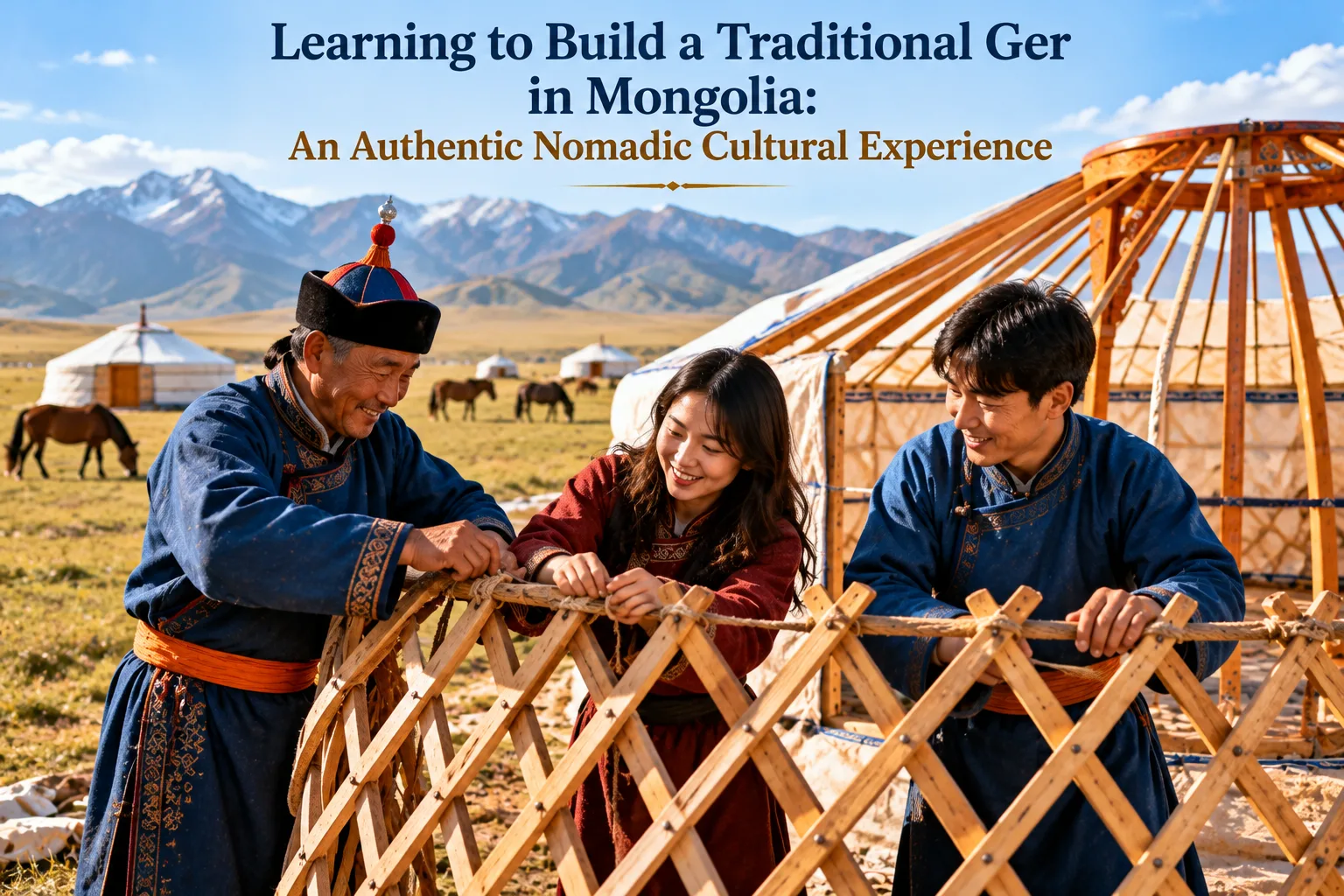
Learning to Build a Traditional Ger in Mongolia: An Authentic Nomadic Cultural Experience
Imagine standing on Mongolia’s vast open steppe, surrounded by rolling grasslands, distant mountains, and herds of grazing horses. Beside you, a local herder demonstrates how wooden lattice walls unfold, roof poles connect to a circular crown, and layers of felt transform a simple framework into a warm, comfortable home.
This is the experience of learning to build a traditional Mongolian ger, one of the most fascinating ways to discover the country's nomadic heritage.
A traditional ger-building experience in Mongolia allows travelers to participate in a centuries-old architectural tradition while learning about the practical skills that support life on the grasslands. With guidance from local families or experienced craftspeople, visitors can explore the structure of a ger, understand its materials, and discover why this portable dwelling remains an important symbol of Mongolian culture.
For travelers seeking meaningful cultural activities beyond conventional sightseeing, building a ger offers a memorable combination of hands-on learning, traditional craftsmanship, and life on the Mongolian steppe.
What Is a Traditional Mongolian Ger?
A ger is a round, portable dwelling traditionally used by Mongolian nomadic and pastoral communities. Outside Mongolia, similar structures are widely known by the term yurt, but ger is the usual Mongolian name.
Designed for a mobile way of life, a traditional ger can be dismantled, transported, and reassembled as families move between seasonal pastures. Its circular shape, flexible wooden framework, and insulating coverings make it well suited to the demanding conditions of the Mongolian climate.
A traditional ger generally consists of several essential components:
Khана (lattice walls): Expandable wooden sections that form the circular wall.
Roof poles: Wooden supports extending from the walls toward the center.
Toono (roof crown): The central circular structure that supports the roof poles and can provide ventilation and natural light.
Door frame: The entrance structure, traditionally made from wood.
Felt coverings: Insulating layers that help protect the interior from cold and wind.
Ropes and outer coverings: Materials used to secure the structure and protect it from the weather.
Although designs and materials vary, these components work together to create a practical dwelling that can be adapted to changing seasons and living conditions.
Learning about each part helps visitors understand that a ger is not simply a tent. It is a carefully designed home shaped by generations of experience.
The Cultural Significance of the Mongolian Ger

The ger is closely connected to Mongolia's pastoral traditions, family life, and relationship with the natural environment.
For generations, herding communities have relied on mobile dwellings that can be moved as grazing conditions change. This flexibility supports a lifestyle in which livestock, seasonal weather, water sources, and pasture availability influence daily decisions.
The circular interior also reflects practical and cultural considerations. The arrangement of furniture, stove, sleeping spaces, and household objects often follows established customs, with the central area serving important everyday functions.
A ger may also provide a welcoming space for guests. Hospitality is an important element of Mongolian culture, and visitors invited into a family ger may be offered tea, dairy products, or other traditional refreshments.
During a building workshop, local hosts can explain these customs and describe how modern life has influenced the use of traditional dwellings.
By participating in the construction process, travelers gain a better understanding of the ingenuity and practical knowledge behind Mongolia's nomadic heritage.
What to Expect During a Ger-Building Workshop
A ger-building workshop usually begins with an introduction to the structure and materials, followed by a practical demonstration. Depending on the host, participants may help assemble a small demonstration ger or assist with a full-sized structure under supervision.

1. Assembling the Wooden Lattice Walls
The first stage involves positioning and connecting the expandable wooden lattice sections that form the circular walls.
Local instructors may demonstrate how the sections open, how they are joined together, and how the circular shape is maintained. Participants can learn how the wall framework creates a stable base for the rest of the dwelling.
This stage also reveals why portability is so important. The lattice structure can be folded for transportation and expanded again when the family establishes a new camp.
2. Installing the Roof Crown and Roof Poles
Once the walls are positioned and the door frame is secured, the next stage involves connecting the roof poles to the central crown.
This is one of the most important steps in the assembly process because the poles help support the roof and distribute its weight.
For a full-sized ger, lifting and securing the crown can require several people working together. Visitors should follow the instructor's directions and avoid lifting heavy components without proper assistance.
The process demonstrates how traditional architecture combines relatively simple materials with careful structural planning.
3. Adding Felt Insulation and Outer Coverings

After the wooden framework is complete, layers of felt and other coverings are placed over the walls and roof.
Traditional felt is often made from sheep's wool, connecting ger construction with Mongolia's pastoral economy. Its insulating properties help maintain a more comfortable interior through cold winters and changing weather conditions.
The coverings must be positioned and secured carefully to protect the structure from wind and precipitation. The exact arrangement varies according to the ger design and local practices.
During a workshop, visitors may help with selected tasks while learning why the choice and placement of materials matter.
4. Learning the Finishing Details
The final stage includes securing ropes, checking the coverings, and ensuring the structure is properly assembled.
The instructor may also explain how the doorway, roof opening, interior stove, and ventilation arrangements contribute to everyday use.
Once the ger is complete, visitors can appreciate the result of a coordinated process that transforms separate wooden pieces and felt coverings into a functional dwelling.
Depending on the program, the experience may conclude with refreshments, a traditional meal, or a conversation with the host family.
Discover Traditional Materials and Craftsmanship

One of the most rewarding parts of a ger-building experience is learning how local materials are adapted to the environment.
Wood provides the framework. The lattice walls must be flexible enough for transport while remaining strong enough to support the structure.
Sheep's wool felt provides insulation and reflects the close relationship between pastoral life and architecture. Preparing traditional felt is itself a skilled craft, involving the processing and compacting of wool fibers.
Ropes and ties help hold the framework and coverings in place. Their positioning is important for stability, particularly when the structure is exposed to strong winds.
The roof crown plays a central structural role while also allowing an opening for ventilation and light, depending on the covering and weather conditions.
These details illustrate how traditional Mongolian architecture developed in response to a mobile lifestyle and an often challenging climate.
Where to Experience Ger Building in Mongolia
Travelers can look for ger-building activities through community-based tourism initiatives, local herding families, cultural camps, and rural tourism operators.
Potential destinations include areas around Ulaanbaatar, the grasslands of central Mongolia, and regions near the Gobi Desert. Availability varies, and not every ger camp offers an actual construction workshop.
When choosing an experience, look for programs that:
Are led by local hosts with practical knowledge of ger construction.
Clearly describe whether visitors will assemble a full-sized ger or a smaller demonstration structure.
Explain the cultural significance of the dwelling, rather than treating the activity as a photo opportunity.
Provide appropriate supervision for lifting and securing structural components.
Compensate participating families and craftspeople fairly.
If you want to experience traditional nomadic life more broadly, ask whether the visit can also include a discussion about livestock herding, seasonal migration, traditional food, or the daily use of a ger.
Best Time to Join a Ger-Building Experience
Late spring, summer, and early autumn are often convenient periods for outdoor cultural activities in Mongolia, although conditions depend on the region and altitude.
Summer generally offers warmer temperatures and longer daylight hours, making it easier to explore the steppe and participate in practical workshops. Early autumn can bring beautiful landscapes and cooler weather.
Before booking, ask the host:
Is the workshop available during your travel dates?
Will you help assemble a complete ger or practice with a demonstration model?
How long does the activity take?
Are transportation, meals, and interpretation included?
What clothing and footwear are recommended?
Mongolia's weather can change quickly, especially in open grassland areas. Bring layers, sun protection, and sturdy footwear, and follow local guidance if strong winds or other conditions affect the activity.
Responsible Cultural Tourism Tips
Participating in a ger-building workshop is an opportunity to learn from local communities, so respectful behavior matters.
Listen to your hosts. Follow instructions when handling wooden components, ropes, and felt coverings.
Respect family customs. If you are invited into an occupied ger, ask your host about appropriate etiquette before entering or photographing the interior.
Support local communities. Choose locally operated programs and consider purchasing handmade crafts or locally produced foods when available.
Avoid waste. Treat construction materials carefully and return reusable equipment as instructed.
Be realistic about the experience. Traditional construction requires teamwork and knowledge. The aim is to learn and participate safely, not to rush through the process.
Final Thoughts
Learning to build a traditional ger in Mongolia is a rewarding way to explore the country's nomadic heritage through practical experience. From assembling wooden lattice walls to positioning roof poles and adding wool felt coverings, each stage reveals the thoughtful design behind this remarkable dwelling.
The experience also offers an opportunity to meet local hosts, discover the relationship between pastoral life and architecture, and understand how traditional knowledge continues to shape Mongolian culture.
For travelers seeking something more meaningful than conventional sightseeing, building a traditional Mongolian ger with local herders can be an unforgettable cultural adventure. With a responsible local guide, an open mind, and respect for community traditions, you can gain a deeper appreciation of life on the Mongolian steppe.