Learning Goat Herding and Pasture Management in the Negev: An Authorized Community-Based Cultural Experience
Introduction: Discovering Traditional Pastoral Life in the NegevThe Negev Desert in southern Israel is a landscape of rugged hills, dry valleys, rocky plateaus, and sparse vegetation. Although the region is known for its...
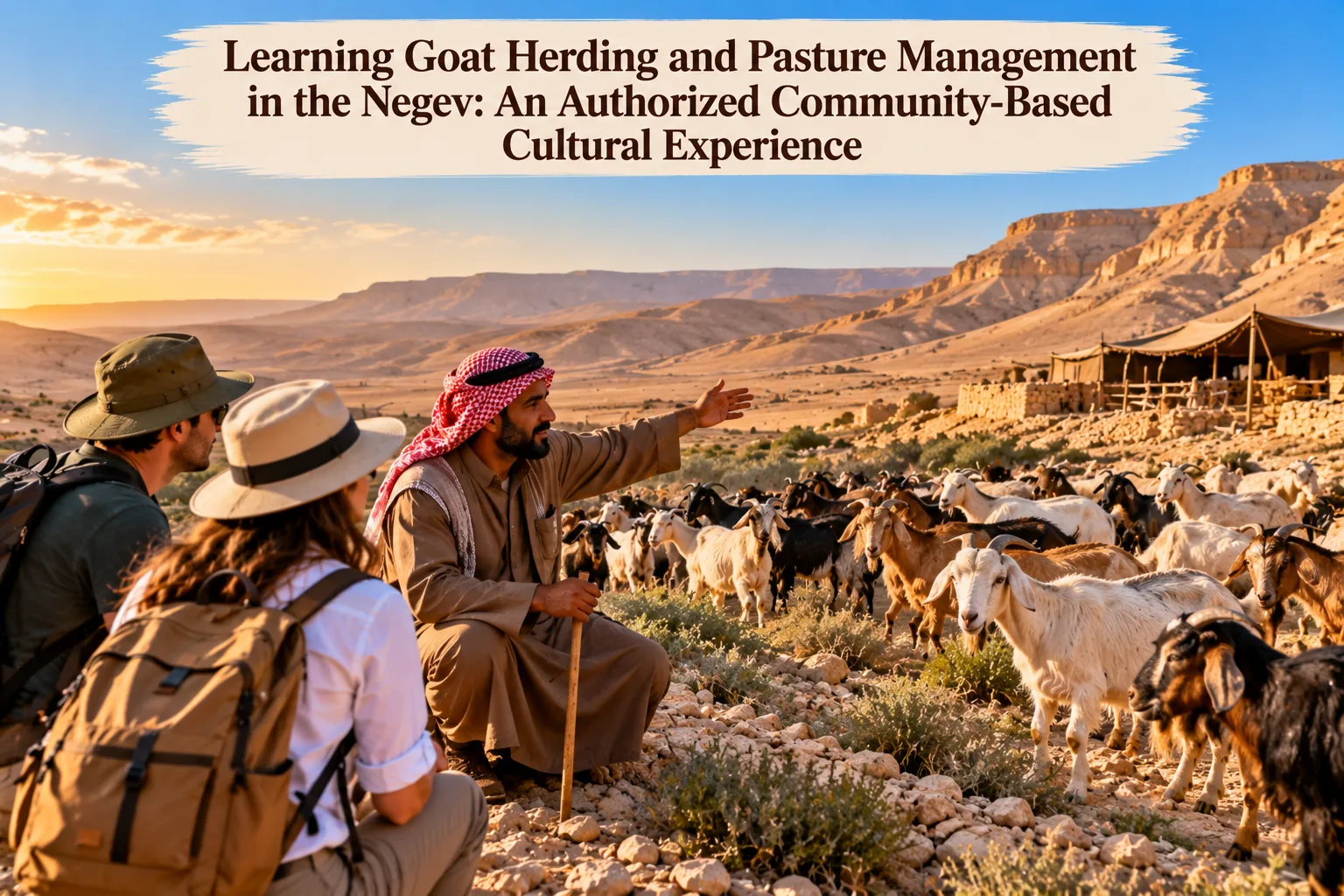
Learning Goat Herding and Pasture Management in the Negev: An Authorized Community-Based Cultural Experience
Introduction: Discovering Traditional Pastoral Life in the Negev
The Negev Desert in southern Israel is a landscape of rugged hills, dry valleys, rocky plateaus, and sparse vegetation. Although the region is known for its challenging climate, pastoral communities have developed ways of raising livestock and managing limited grazing resources for generations.
One meaningful way to understand this environment is through an authorized community-based goat herding and pasture management program. Such an experience can introduce visitors to traditional livestock care, seasonal grazing practices, and the relationship between pastoral livelihoods and desert ecology.
Rather than simply observing goats in a desert landscape, participants can learn how herders assess available vegetation, provide water, protect animals, and adapt their routines to changing weather conditions. When offered by a legitimate local organization, the experience can also provide insight into community knowledge and the challenges of maintaining pastoral traditions today.
For travelers interested in cultural heritage, sustainable agriculture, and responsible ecotourism, learning about goat herding in the Negev offers a distinctive perspective on life in an arid environment.
Important: Program availability, community participation, and access to grazing areas vary. Arrange your visit directly with an authorized community organization or local operator, and follow all land-access, animal-welfare, and environmental requirements.
1. Understanding the Tradition of Goat Herding in the Negev

Goat herding has long been part of pastoral life across the Middle East, including parts of the Negev. Goats are valued for their ability to browse a variety of plants and adapt to environments where grazing resources are scattered and seasonal.
For pastoral households, livestock can provide milk, meat, and other useful products. Herding practices also involve accumulated knowledge about animal behavior, vegetation, water availability, and changing environmental conditions.
During an authorized community visit, participants may learn how herders guide their animals across suitable terrain, recognize signs of stress or dehydration, and adjust grazing routines according to the condition of the land.
Traditional knowledge is particularly important in dry regions, where vegetation may recover slowly after grazing and water sources can be limited. Effective livestock management requires balancing the needs of the herd with the capacity of the surrounding environment.
A community-led experience can help visitors understand that pastoralism involves much more than moving animals from place to place. It is a practical system shaped by experience, environmental awareness, and decisions made throughout the year.
2. Learn How Herders Manage Grazing Land

Pasture management is one of the most important aspects of keeping goats in an arid environment. In the Negev, rainfall is limited and vegetation can vary significantly between seasons and locations. Herders must therefore pay attention to the condition of the land as well as the needs of their animals.
A community-based learning program may introduce several principles of responsible grazing:
Assessing vegetation: Identifying areas with sufficient edible plants before allowing a herd to graze.
Managing grazing pressure: Avoiding excessive concentration of animals in one location.
Rotating grazing areas where feasible: Allowing vegetation time to recover before livestock return.
Protecting fragile habitats: Avoiding sensitive areas where grazing could damage native plants or accelerate erosion.
Monitoring seasonal conditions: Adjusting herd movements when rainfall, temperatures, or forage availability change.
These practices are not identical across all pastoral communities. Local decisions depend on land access, herd size, available water, vegetation types, and weather conditions.
An experienced guide can explain how herders evaluate the landscape and recognize signs that a grazing area may need time to recover.
The experience also highlights a broader environmental lesson: sustainable livestock management requires understanding the limits of the land. In dry ecosystems, excessive grazing can reduce plant cover, expose soil to erosion, and make vegetation recovery more difficult.
3. Discover the Relationship Between Goats and Desert Ecology
Goats are adaptable animals, but their ability to survive in challenging environments does not mean that grazing has no ecological consequences. Understanding the relationship between livestock and native vegetation is essential to responsible pasture management.
In the Negev, desert shrubs, grasses, and other plants provide food and shelter for a variety of organisms. Their growth depends on rainfall, soil conditions, temperature, and other environmental factors.
During a guided activity, visitors may learn to distinguish between different types of vegetation and understand why some plants are more vulnerable to browsing than others. Guides may also explain how plant cover helps stabilize soil and how grazing intensity can influence the condition of the landscape.
A well-managed pastoral system aims to support healthy livestock without placing excessive pressure on natural resources. This can involve adjusting grazing schedules, providing supplementary feed when necessary, and protecting areas that are especially sensitive.
Participants should follow the program's instructions and avoid feeding goats unfamiliar plants or approaching wildlife independently.
Learning about these ecological relationships makes the visit more meaningful because it reveals the complex balance between livestock production, traditional livelihoods, and the conservation of desert habitats.
4. Experience Everyday Goat Care Through a Community Program

An authorized community program may include a demonstration of everyday goat care, giving visitors a closer look at the responsibilities involved in maintaining a healthy herd.
Depending on the host organization and the activities permitted, participants may observe how herders check the animals, organize feeding, maintain suitable shelter, and monitor access to clean water.
You may also learn about common signs of animal stress, the importance of veterinary care, and the practical challenges of keeping livestock in hot, dry conditions.
Typical learning activities might include:
Observing how a herder checks the condition and behavior of goats.
Learning why clean drinking water and shade are essential.
Understanding how young animals are cared for.
Discovering how milk production and other livestock products fit into pastoral livelihoods.
Discussing the role of local knowledge in identifying changes in animal health.
Hands-on participation should only take place with the host's permission and appropriate supervision. Visitors should not handle young animals, enter pens, or attempt milking unless the activity is explicitly offered and explained by the responsible community members.
The purpose of the experience is to learn from local expertise while respecting animal welfare and the host community's daily routines.
5. Understand the Cultural Significance of Pastoral Traditions
Goat herding is not only an agricultural activity. Across pastoral communities in the Middle East, livestock management has also shaped food traditions, household economies, practical skills, and relationships with the surrounding landscape.
In the Negev, community-led educational experiences can provide opportunities to hear how pastoral knowledge is passed between generations and how families adapt traditional practices to contemporary conditions.
A local host may discuss the importance of livestock products, the organization of daily herding routines, and the challenges of maintaining a pastoral livelihood in a changing economic and environmental context.
These conversations can be especially valuable because they allow visitors to learn directly from community members rather than relying solely on general descriptions of desert life.
However, the Negev is home to diverse communities with different histories, circumstances, and cultural practices. No single herding experience represents every pastoral household or community in the region.
Responsible cultural tourism therefore begins with listening, asking respectful questions, and allowing participants to decide which aspects of their lives they wish to share.
6. Why Community-Based Pasture Learning Matters

Community-based learning can connect visitors with local knowledge while encouraging greater awareness of environmental stewardship.
A well-organized program should have clear permission to operate, respect the host community's wishes, and explain how the visit benefits participating residents. It should also avoid disrupting normal livestock routines or placing unnecessary pressure on grazing land.
Before booking, consider asking the organizer:
Who leads the activity, and what is their experience with local pastoral practices?
Is the visit authorized for the proposed location?
Which activities are available, and are they suitable for the season?
How does the program support participating community members?
What measures are taken to protect livestock, vegetation, and water resources?
These questions help distinguish meaningful educational experiences from activities that merely use pastoral culture as a tourist attraction.
For travelers, the greatest value often lies in understanding how environmental decisions are made in practice. Seeing how herders assess vegetation, care for animals, and respond to changing conditions can offer lessons that are difficult to gain from a conventional sightseeing tour.
7. Best Time to Learn About Goat Herding in the Negev
The most suitable time for a pastoral experience depends on local weather, the host community's schedule, and the condition of the grazing land.
Cooler months are generally more comfortable for outdoor activities in the Negev. Spring can offer opportunities to observe seasonal vegetation following favorable rainfall, although conditions vary considerably from year to year.
Early morning is often preferable for outdoor observation, especially during warmer periods. Always confirm the timing with the organizer, as herding activities follow the needs of the animals rather than a fixed tourist schedule.
Bring drinking water, sun protection, sturdy walking shoes, and clothing appropriate for the terrain. Follow local guidance about where to walk and avoid entering grazing areas without permission.
Most importantly, be flexible. Rainfall, heat, animal health, and other practical considerations may require a host to change or cancel an activity.
8. Responsible Tourism and Animal Welfare
A meaningful goat herding experience should benefit both the participating community and the environment. Visitors can help by following a few straightforward principles.
Respect the host community's rules, privacy, and photography preferences.
Never chase, frighten, or feed goats without permission.
Keep a safe distance from young animals and livestock guarding dogs.
Follow authorized routes and avoid trampling native vegetation.
Do not leave litter or disturb wildlife.
Support local guides and community-run initiatives when possible.
Responsible tourism also means recognizing that grazing is a complex land-management issue. Appropriate stocking levels and grazing schedules depend on local ecological conditions, and traditional practices may need to adapt to changing rainfall patterns, land availability, and other pressures.
By learning directly from knowledgeable local hosts, visitors can gain a more balanced understanding of the opportunities and challenges associated with pastoral life in the Negev.
Final Thoughts
Learning about goat herding and pasture management in the Negev through an authorized community-based program offers a distinctive way to explore the relationship between people, livestock, and the desert environment.
From observing daily animal care to understanding grazing strategies and the importance of native vegetation, the experience reveals the knowledge and practical decisions involved in maintaining livestock in an arid landscape.
It also provides an opportunity to appreciate the cultural significance of pastoral traditions while recognizing that each community has its own experiences, priorities, and challenges.
For travelers interested in sustainable agriculture, cultural heritage, and responsible nature tourism, a well-organized visit can be far more meaningful than a conventional desert excursion.
Explore the Negev through the knowledge of its pastoral communities, discover how goats and grazing land are managed, and gain a deeper appreciation of the delicate balance between traditional livelihoods and desert ecology.