Diving with Manta Rays in the Maldives: An Unforgettable Underwater Adventure
Few underwater experiences are as captivating as manta ray diving in the Maldives. Imagine descending into clear Indian Ocean water, drifting quietly above a coral reef, and suddenly seeing a giant manta ray glide effort...
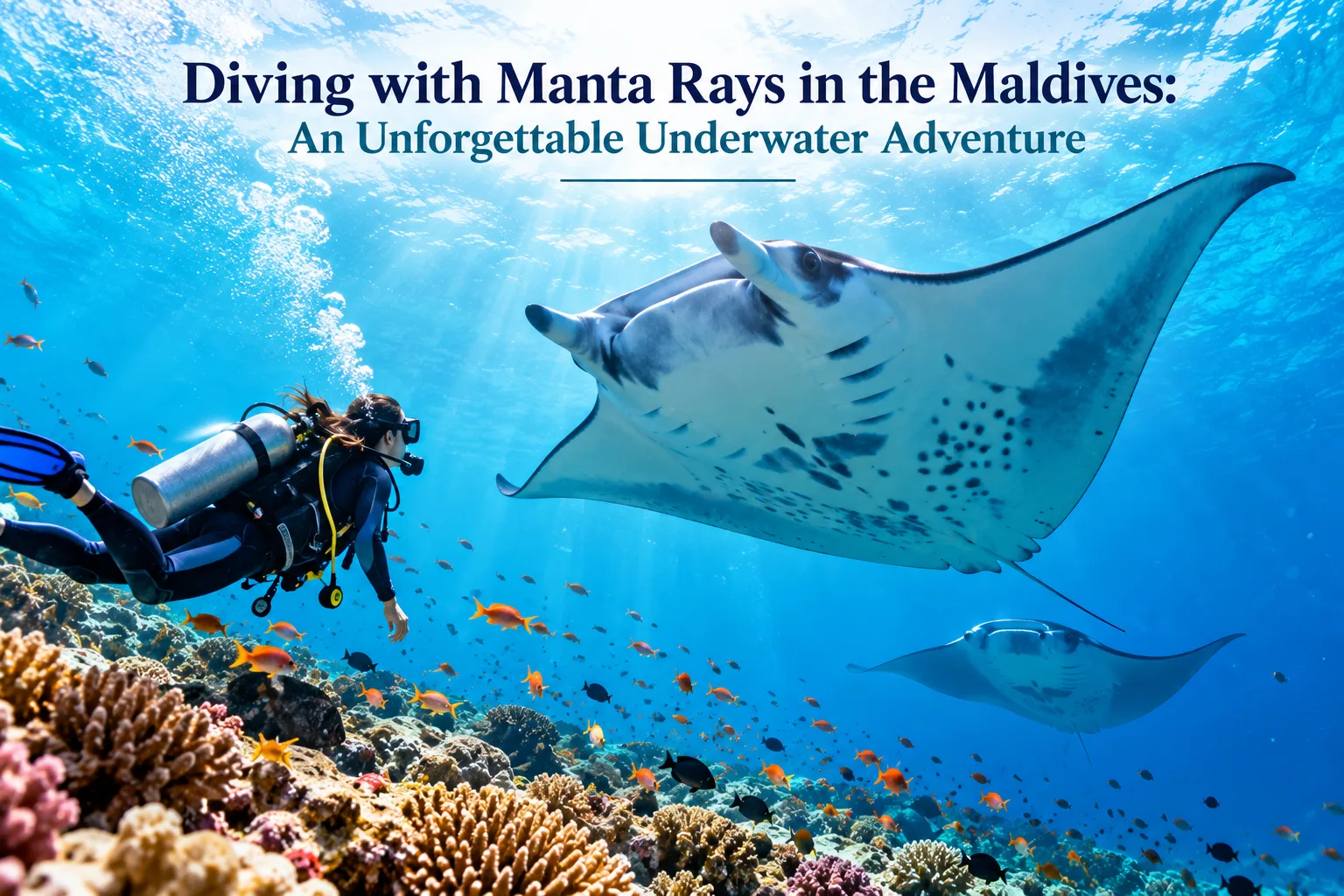
Diving with Manta Rays in the Maldives: An Unforgettable Underwater Adventure
Few underwater experiences are as captivating as manta ray diving in the Maldives. Imagine descending into clear Indian Ocean water, drifting quietly above a coral reef, and suddenly seeing a giant manta ray glide effortlessly toward you.
With their enormous wingspans, graceful movements, and curious behavior, manta rays have become one of the Maldives' most iconic marine encounters. The country's atolls offer reefs, channels, thilas, cleaning stations, and plankton-rich waters where divers may encounter these remarkable animals.
For underwater photographers, scuba divers, and marine-life enthusiasts, diving with manta rays can become the highlight of a trip to the Maldives.
Why Go Manta Ray Diving in the Maldives?


The Maldives is made up of 26 natural atolls and more than 1,000 coral islands, creating an enormous network of underwater habitats.
Manta rays are attracted to areas where ocean currents concentrate plankton, their primary food. They also visit cleaning stations, where small reef fish remove parasites and dead tissue from their bodies. These locations can provide extraordinary opportunities for divers to observe natural manta behavior.
Unlike some marine encounters that involve actively searching for animals, manta diving can feel almost meditative. Divers may simply settle into a comfortable position and wait while the rays circle, glide, or pass overhead.
Understanding the Maldives' Manta Rays
Reef manta rays are filter feeders. They swim through plankton-rich water with their mouths open, filtering food through specialized structures inside their gills. The Maldives is particularly important for reef manta research and conservation.
Their enormous size can be surprising the first time you encounter one underwater. Despite their appearance, manta rays do not have the venomous barb associated with stingrays.
One of the most memorable aspects of an encounter is their graceful movement. A manta can appear to fly through the water, using its broad pectoral fins to make slow, powerful movements.
Baa Atoll: A Famous Manta Ray Destination


Baa Atoll is one of the Maldives' most famous areas for manta ray encounters.
The UNESCO Biosphere Reserve includes Hanifaru Bay, a protected marine area known for seasonal manta aggregations. During the southwest monsoon, plankton can become concentrated inside the bay, attracting large numbers of manta rays.
However, there is an important distinction for travelers planning a manta ray diving Maldives trip: scuba diving is not permitted inside Hanifaru Bay. The area is managed with strict regulations, and visitors generally experience the manta aggregations through guided snorkeling instead.
That does not mean divers need to miss out on manta encounters in Baa Atoll. Other dive sites and cleaning stations in the wider atoll can offer scuba-diving opportunities, depending on local conditions and operator itineraries.
When Is Manta Ray Season in the Maldives?
Manta rays can be encountered in different parts of the Maldives throughout the year, but seasonality varies considerably between atolls and individual sites.
For example:
Baa Atoll: May to December is an important period for manta aggregations around Hanifaru Bay.
Raa Atoll: Mantas can be present year-round, with different areas becoming more productive during different monsoon seasons.
South Ari Atoll: Manta activity occurs at different sites during different parts of the year.
North Malé Atoll: Sites such as Lankan Manta Point are associated with manta encounters from approximately May to November.
Because sightings depend on plankton, tides, currents, weather, and animal behavior, there is never a guarantee that mantas will appear on a particular dive.
Dive at Manta Cleaning Stations
One of the most fascinating experiences is watching a manta visit a cleaning station.
At these underwater locations, cleaner fish remove parasites and dead skin from manta rays. A manta may repeatedly circle or hover over the reef while the small fish perform their work.
For divers, this creates a remarkable opportunity to observe natural behavior without chasing the animal.
The correct approach is patience. Find a suitable position at the side of the cleaning station, maintain good buoyancy, and allow the manta to decide how close it wants to come. Maldives tourism guidance specifically advises divers not to swim into the main cleaning area.
What Does a Manta Ray Dive Feel Like?
The experience can vary dramatically from one dive to another.
Sometimes a single manta appears in the distance and disappears after a few seconds. On another dive, several rays may circle above a cleaning station for an extended period.
The most memorable encounters often happen when divers remain calm and motionless.
You may see a manta:
Glide directly overhead
Circle a cleaning station
Approach from the side
Turn gracefully in the current
Feed near the surface
Interact with other manta rays
The key is to observe rather than pursue.
Best Places for Manta Ray Scuba Diving
Although the Maldives offers manta encounters across many atolls, several regions are particularly well known.
North Malé Atoll
Lankan Manta Point is one of the better-known manta sites in North Malé Atoll. Visit Maldives identifies May through November as an important period for encounters at this location.
Raa Atoll
Raa Atoll has resident manta rays and several seasonal areas where sightings can be particularly good. The timing depends on monsoon-driven currents and plankton movement.
South Ari Atoll
South Ari is internationally famous for whale sharks, but manta rays also visit the atoll. Sites on different sides of the atoll can become productive at different times of the year.
Baa Atoll
Baa Atoll is especially famous for its large seasonal manta aggregations. While Hanifaru Bay itself is primarily a snorkeling experience, scuba divers can explore other manta sites in the surrounding atoll.
Manta Ray Diving for Beginners
You do not necessarily need to be an advanced diver to experience manta rays.
The Maldives offers diving experiences for different certification levels, although individual sites can have strong currents, deeper sections, or challenging conditions. The official Maldives tourism guide notes that the country's dive experiences range from beginner-friendly reefs to sites suited to experienced current divers.
If you are a newer diver, tell your dive center about your experience level. A good operator can select an appropriate site based on your certification, recent diving experience, weather, and current conditions.
Strong buoyancy control is especially important around mantas and coral reefs.
Responsible Manta Ray Diving
A close encounter is exciting, but responsible behavior should always come first.
Maldives tourism guidance recommends maintaining a respectful distance, entering the water calmly, avoiding chasing manta rays, and never touching them. Divers should also maintain good buoyancy so they do not accidentally damage coral or interfere with the animals.
Follow these simple rules:
Never touch a manta ray.
Never chase a manta.
Let the animal choose the distance.
Maintain excellent buoyancy control.
Keep fins underwater to minimize splashing.
Do not block the manta's path.
Stay beside, rather than inside, a cleaning station.
Avoid damaging coral while positioning yourself.
Follow the instructions of local dive guides.
Responsible encounters help protect the animals and make the experience more enjoyable for everyone.
Underwater Photography Tips
Manta rays are fantastic subjects for underwater photography because of their size and graceful movements.
A wide-angle lens is useful when photographing a large animal at close range. Instead of chasing the manta, find a good position and wait for it to approach.
Try to photograph the animal against the blue water rather than always pointing the camera directly toward the reef. This can emphasize its enormous silhouette.
If the manta passes overhead, look upward and use the diver's bubbles or sunlit water as part of the composition.
Most importantly, don't sacrifice respectful behavior for a photograph. A great manta photograph is never worth disturbing the animal.
What to Bring for a Manta Dive
For a typical Maldives scuba trip, consider bringing:
Mask and snorkel
Fins
Exposure protection appropriate for the water temperature
Regulator and BCD if using personal equipment
Dive computer
Surface signaling equipment
Reef-safe sunscreen
Underwater camera
Spare batteries or charging equipment
Dry bag for boat trips
If you are traveling internationally, many dive operators can provide rental equipment, but confirm equipment availability before booking.
Choosing a Manta Ray Dive Operator
A responsible operator can make a major difference.
Look for dive centers that:
Employ qualified dive professionals
Explain local manta guidelines
Prioritize marine conservation
Keep groups manageable
Adapt dives to current conditions
Avoid chasing or touching wildlife
Provide clear safety briefings
Operators with connections to local marine researchers or conservation programs can also provide useful information about manta identification and behavior.
The Maldives has a strong manta research community, including long-running work associated with the Manta Trust, which has contributed to understanding manta populations and movements in Maldivian waters.
A Sample Manta Ray Diving Day
A typical day might begin with an early breakfast before heading to the dive center.
After a safety briefing, the group travels by boat toward a reef or cleaning station. Once underwater, divers descend carefully and find a suitable position.
Then comes the best part: waiting.
A dark silhouette appears in the blue. The wings become visible. The manta approaches, glides over the reef, and disappears into the distance.
Sometimes it returns.
After the dive, there may be a surface interval followed by another reef dive or a snorkeling excursion.
The exact itinerary depends on the dive center, weather, currents, and the location of manta activity.
Final Thoughts
Manta ray diving in the Maldives is an experience that combines adventure, marine biology, photography, and the simple wonder of being underwater.
From the seasonal aggregations of Baa Atoll to cleaning stations across North Malé, Raa, South Ari, and other atolls, the Maldives offers numerous opportunities to encounter these extraordinary animals.
The most important thing is to remember that manta rays are wild animals. The best encounters happen when divers are patient, quiet, and respectful.
For anyone fascinated by marine life, descending beneath the surface and watching a giant manta ray glide silently through the blue is more than a dive—it is a remarkable connection with the underwater world of the Maldives.