Experiencing a Newari Feast in Patan: A Journey into Nepal’s Living Food Culture
Introduction: Discover the Flavors of PatanIn Patan, one of the historic cities of Nepal’s Kathmandu Valley, food is much more than a way to satisfy hunger. It connects families, celebrates important occasions, and prese...
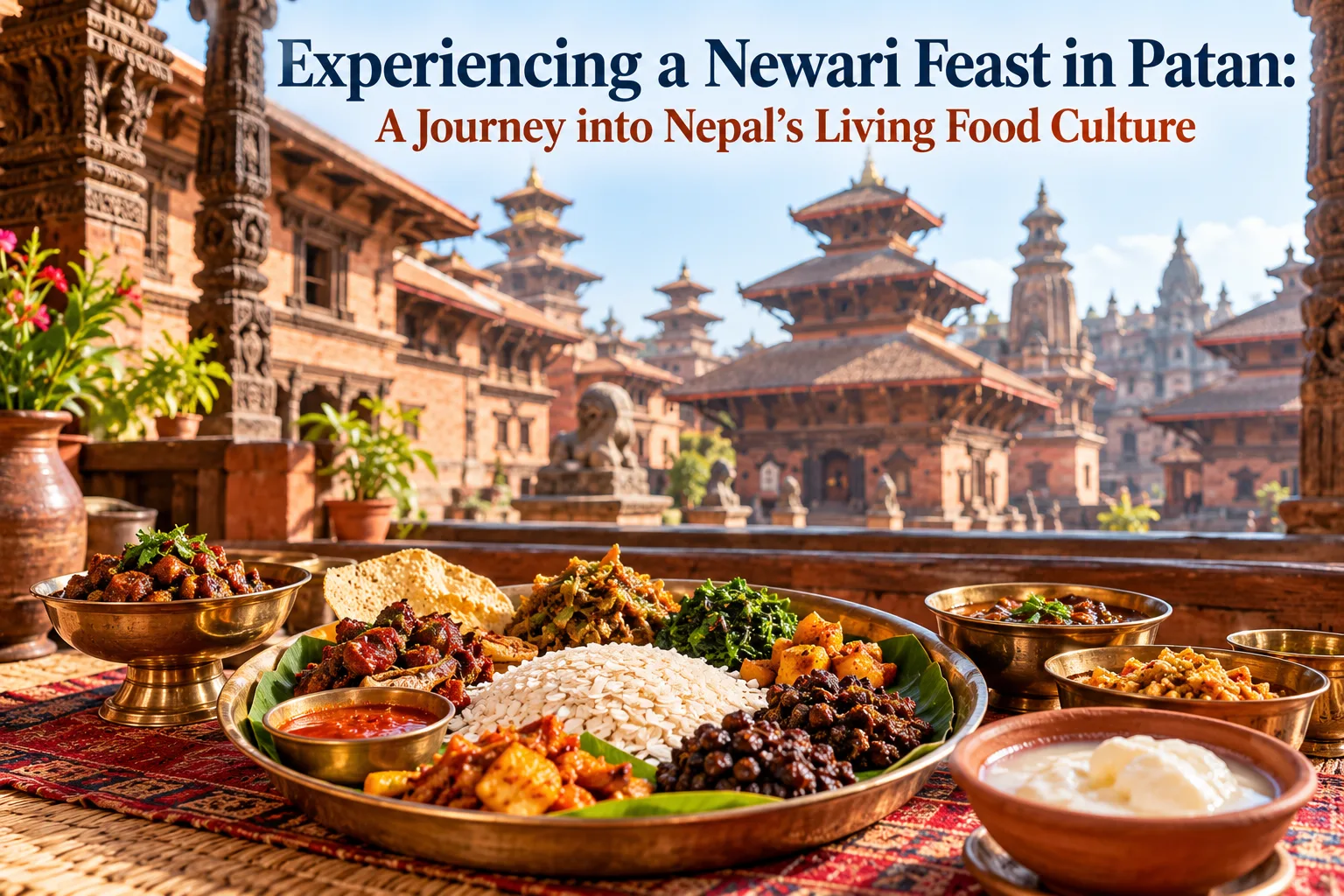
Experiencing a Newari Feast in Patan: A Journey into Nepal’s Living Food Culture
Introduction: Discover the Flavors of Patan
In Patan, one of the historic cities of Nepal’s Kathmandu Valley, food is much more than a way to satisfy hunger. It connects families, celebrates important occasions, and preserves culinary traditions passed from one generation to the next.
Known to many Newars by its Nepal Bhasa name, Yala, Patan is celebrated for its historic temples, carved wooden windows, traditional courtyards, and distinctive food culture. A Newari feast offers a delicious way to experience this heritage, bringing together carefully prepared dishes with contrasting textures, bold spices, and meaningful social traditions.
At the heart of the experience is often samay baji, a traditional assortment of foods associated with festivals, religious observances, and family gatherings. Other favorites, including bara, chatamari, and choila, reveal the variety of Newar cooking.
For travelers interested in authentic cultural experiences, experiencing a Newari feast in Patan is an opportunity to explore Nepal through its kitchens, local eateries, and traditions of sharing food.
1. Understand the Cultural Meaning of a Newari Feast

Newari cuisine, also called Newa cuisine, developed among the Newar people, whose cultural history is closely connected with the Kathmandu Valley. Its dishes reflect centuries of local agricultural knowledge, trade, craftsmanship, and religious and community traditions.
Feasting plays an important role in Newar social life. Meals may accompany festivals, family celebrations, religious observances, and community gatherings. The food served depends on the occasion, the household, and local customs.
A traditional feast is therefore more than a collection of recipes. It is an expression of hospitality and belonging, bringing people together around food that has cultural significance.
Visitors should also remember that not every Newari feast is a ceremonial event. Many restaurants serve traditional dishes as everyday meals, making it possible to explore this cuisine without attending a private family celebration.
2. Begin with Samay Baji, the Traditional Feast Platter
One of the best introductions to Newari food is samay baji, a platter combining several small portions of traditional dishes.
Although ingredients vary by household and occasion, a typical platter may include beaten rice, seasoned meat, fried black soybeans, ginger, pickles, and other accompaniments. Some versions include eggs, fried fish, lentil cakes, or additional seasonal foods.
Each component contributes a different flavor and texture.
Baji: Beaten or flattened rice that provides a mild, slightly chewy foundation.
Choila: Spiced grilled or seared meat, often buffalo, with smoky and savory flavors.
Bhatmas: Fried black soybeans that add crunch and a roasted taste.
Achar: Pickles or spicy relishes that bring acidity and heat.
Palu, or fresh ginger: A sharp, warming accompaniment that contrasts with richer foods.
Bara or wo: Savory lentil cakes that add a soft, substantial element.
The platter is especially interesting because no single flavor dominates every bite. You can combine ingredients in different ways, balancing the mild rice with spicy meat, crunchy beans, or tangy pickles.
If this is your first Newari meal, samay baji is an excellent place to begin because it introduces several important elements of the cuisine at once.
3. Try Bara and Chatamari, Two Local Favorites
A Newari feast does not have to end with one platter. Adding a few individual dishes gives you a broader taste of Patan's culinary traditions.

Bara: A savory lentil cake
Bara, also known as wo, is made primarily from ground lentils and cooked into a savory pancake. Depending on the preparation, it may be served plain or topped with egg or meat.
Its texture is satisfying without being overly heavy, making it a popular choice for a snack or part of a larger meal.
Chatamari: The Newari rice-flour specialty
Often described as a Newari-style rice crepe, chatamari is made from a thin rice-flour batter and topped with ingredients such as egg, minced meat, or vegetables.
The base is relatively light, while the toppings add flavor and substance. It is a good choice for travelers who want to sample something different from the more familiar rice-and-curry meals often associated with Nepalese dining.
Both dishes are widely featured in descriptions of Newari food experiences across Patan and the wider Kathmandu Valley.
Travel tip: If you are dining with friends, order a few different dishes to share. This lets everyone compare flavors and discover personal favorites.
4. Discover the Bold Flavors of Choila and Newari Pickles
Choila is one of the most recognizable dishes in Newari cuisine. It commonly features meat that is grilled or seared, then seasoned with spices and other flavorings.
Buffalo meat is a traditional choice, although ingredients and preparation vary. Some versions have a smoky character, while others emphasize chili, garlic, ginger, or aromatic spices.
Pickles, often called achar, provide another important part of the meal. They can introduce sour, spicy, salty, and sometimes fermented flavors that complement the richer dishes.
Together, choila and achar demonstrate how Newari food balances different sensations rather than relying on a single dominant taste.
If you prefer milder food, ask about the level of chili before ordering. Traditional preparations can be strongly seasoned, and the heat varies between kitchens.
Vegetarian visitors can also ask about meat-free combinations, including bara, vegetable pickles, and other available sides. Because recipes differ, confirm the ingredients directly with the restaurant.
5. Explore Patan’s Historic Streets Through Its Food
A Newari feast becomes even more memorable when combined with a walk through Patan's historic center.
The area around Patan Durbar Square features historic architecture, temples, traditional courtyards, workshops, and narrow streets where everyday life continues alongside the city's heritage attractions.
Rather than treating lunch as a separate activity, you can make food part of a wider cultural exploration.
Consider this relaxed itinerary:
Start around Patan Durbar Square. Observe the historic buildings and carved architectural details.
Walk through nearby lanes and courtyards. Look for traditional shops, local activity, and small eateries.
Stop for a Newari meal. Choose a restaurant or food establishment that clearly explains its dishes.
Try a few specialties. Begin with samay baji and add bara or chatamari if you have room.
Continue exploring after lunch. Visit nearby heritage sites or artisan workshops where access is permitted.
Local food guides also identify Patan as a worthwhile place to explore Newari cuisine, including small eateries and restaurants serving traditional specialties.
A knowledgeable local guide can make the experience richer by explaining food names, customary eating practices, and the relationship between local traditions and the surrounding historic city.
6. Experience Newari Hospitality and Dining Customs
A feast is not only about what appears on the plate. The way food is offered and shared can be equally meaningful.
Depending on the setting, a Newari meal may be served on individual plates, traditional metalware, or other dishes used by the household or restaurant. More formal communal feasts may follow specific customs connected with the occasion.
If you are invited to eat in a private home or participate in a cultural gathering, ask your host how the meal is organized rather than assuming that every family follows the same practice.
A few simple guidelines help make the experience respectful:
Wait for your host's guidance if the meal is part of a ceremony.
Ask before photographing people, food offerings, or religious activities.
Be open to unfamiliar flavors, but politely decline anything you cannot eat.
Avoid treating sacred or ceremonial food practices as entertainment.
Show appreciation for the people who prepared the meal.
Restaurants provide an accessible introduction, while a genuine invitation from a local host may offer a more personal perspective on the traditions behind the food. Neither experience should be assumed to represent every Newar household.
7. Taste Yomari and Other Traditional Newari Foods
If you have room for dessert, ask whether yomari is available.
Yomari is a steamed rice-flour dumpling traditionally filled with a sweet mixture, often involving molasses or chaku and sesame seeds. It is especially associated with the Newar festival of Yomari Punhi, celebrated around the rice-harvest season.
Its soft outer layer contrasts with the rich, sweet filling, making it a distinctive way to finish a meal.
Other traditional foods you may encounter include:
Kwati: A soup made with a mixture of sprouted beans, associated with a seasonal festival.
Aloo tama: A preparation combining potatoes with fermented bamboo shoots, found in different forms in Nepalese cooking.
Traditional drinks: Some Newari establishments serve thon, a traditional rice-based beer, or aila, a distilled alcoholic drink.
Availability depends on the restaurant, season, and local practice. Alcohol is not essential to enjoying a Newari feast, and visitors should always drink responsibly where it is legal to do so.
8. Where to Experience a Newari Feast in Patan
Patan has several options for travelers seeking traditional Newari dishes, from small neighborhood eateries to heritage-style restaurants.
One option to investigate is Newa Ghasa in Saugal Tole, which presents itself as a restaurant specializing in Newari cuisine and cultural dining in Patan. You can review its current information through its official website.
You can also research heritage-style dining at Patan Heritage Home & Restaurant, which promotes local cuisine in a traditional setting. Check its current menu before visiting, as the dishes listed may include both Newari and broader Nepalese or international options.
When choosing a place, consider the following:
Look for a menu that clearly identifies Newari dishes.
Ask whether samay baji is available on the day of your visit.
Confirm whether the meal can be adapted for vegetarian diets.
Check opening hours and reservation requirements in advance.
Choose a place that explains its food respectfully and welcomes questions.
For a deeper experience, you could arrange a food walk with a knowledgeable local guide. Ask whether the guide can explain the dishes' cultural background, rather than simply taking you from one restaurant to another.
9. Practical Tips for Planning Your Newari Food Experience
Come hungry, but order thoughtfully. A samay baji platter can contain many components, and adding several dishes may create a substantial meal.
Ask about ingredients. Some traditional foods contain buffalo, other meats, fish, eggs, or fermented ingredients. Confirm what is included if you have dietary restrictions.
Consider spice levels. Pickles and meat preparations can be hot or strongly seasoned.
Carry cash as a backup. Payment options vary between small local establishments and larger restaurants.
Be mindful of food hygiene. Choose places with good food-handling practices, and make sure hot dishes are served freshly prepared.
Allow time to enjoy the setting. A leisurely meal followed by a walk through Patan's historic streets can be more rewarding than trying to fit too many attractions into one afternoon.
Above all, approach the meal with curiosity. Ask questions, taste unfamiliar dishes when you feel comfortable, and appreciate the knowledge and effort behind the food.
Final Thoughts
Experiencing a Newari feast in Patan is a wonderful way to discover the culinary heritage of Nepal's Kathmandu Valley. From the variety of samay baji to the savory flavor of bara, the smoky richness of choila, and the sweetness of yomari, each dish offers a different glimpse into Newar food traditions.
Yet the experience extends beyond flavor. Feasting connects food with family, festivals, hospitality, and community identity. Pairing a traditional meal with a walk through Patan's historic streets can help you appreciate how culinary culture continues to thrive within a living heritage city.
Whether you choose a neighborhood eatery, a heritage-style restaurant, or a guided food walk, take time to understand the dishes rather than simply ticking them off a list.
A Newari feast is not just a meal to remember—it is an invitation to experience Patan through the people, traditions, and flavors that make the city distinctive.