Exploring Jordan’s Roman Water Systems: Ancient Aqueducts and Canals with an Expert Guide
Jordan is famous for its dramatic desert landscapes, ancient cities, and remarkable archaeological treasures. Beyond the monumental temples and colonnaded streets, however, lies another fascinating legacy of the ancient ...
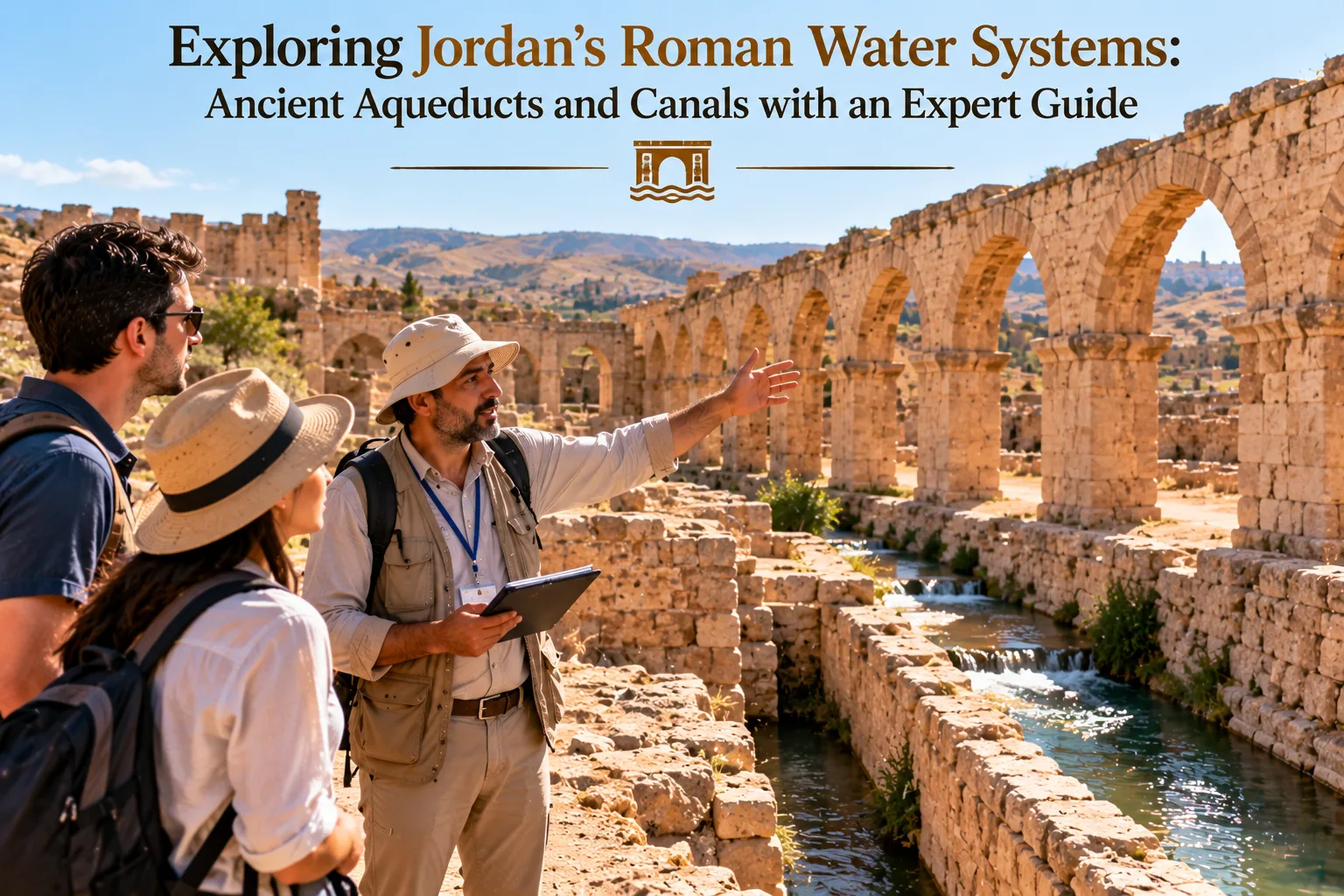
Exploring Jordan’s Roman Water Systems: Ancient Aqueducts and Canals with an Expert Guide
Jordan is famous for its dramatic desert landscapes, ancient cities, and remarkable archaeological treasures. Beyond the monumental temples and colonnaded streets, however, lies another fascinating legacy of the ancient world: the water systems that helped cities flourish in an environment where water was precious.
Exploring Roman water systems in Jordan with an expert guide offers a unique opportunity to discover ancient aqueducts, stone channels, cisterns, reservoirs, and other engineering features that supported urban life nearly two thousand years ago.
These structures reveal how Roman-era communities collected, transported, stored, and distributed water for public baths, fountains, households, and agricultural activities. With the help of an archaeologist or knowledgeable local guide, visitors can look beyond the ruins themselves and understand the ingenuity behind the infrastructure.
Whether you are passionate about archaeology, ancient engineering, or cultural travel, this experience offers a deeper understanding of how Roman cities adapted to the challenging landscapes of the Middle East.
1. Understanding the Importance of Roman Water Systems in Jordan

Water has always been a vital resource in Jordan, where rainfall varies considerably by region and many areas experience long, dry summers. As urban settlements expanded during the Hellenistic, Nabataean, Roman, and Byzantine periods, communities developed increasingly sophisticated ways to secure reliable water supplies.
Roman rule brought further investment in roads, public buildings, baths, fountains, and urban infrastructure. Water management was an essential part of this development, although individual systems often incorporated local engineering traditions and earlier infrastructure.
How Ancient Aqueducts Worked
Aqueducts were designed to carry water from springs or other sources toward settlements. Some used underground conduits, while others followed the natural contours of the landscape.
Where terrain required it, engineers constructed channels supported by masonry walls or arches. Carefully managed gradients allowed water to flow largely under gravity, reducing the need for mechanical pumping.
The surviving remains help archaeologists investigate how ancient builders overcame changes in elevation, geological obstacles, and seasonal variations in water availability.
Water Storage and Distribution
Aqueducts were only one component of a larger system. Reservoirs and cisterns could store water, while channels and pipes directed supplies toward different destinations.
In urban areas, water might serve public fountains, baths, and selected buildings. Storage facilities were particularly important when rainfall and spring flows were unreliable.
These systems demonstrate that Roman-era water management was not simply about transporting water over long distances. It required coordinated planning, maintenance, and an understanding of local environmental conditions.
2. Discovering Ancient Water Engineering with an Expert Guide

Exploring ancient water infrastructure with an expert transforms a visit to archaeological ruins into an investigation of how an ancient city functioned.
Instead of simply looking at stone arches and weathered channels, you can learn how researchers interpret construction techniques, identify possible water routes, and distinguish surviving structures from later modifications.
What You Can Learn During the Tour
Depending on the site and the expertise of your guide, the experience may cover several important subjects.
Aqueduct construction: Discover how stone blocks, masonry supports, and arched structures helped carry water across uneven terrain.
Ancient channels and conduits: Examine the remains of watercourses and learn how their gradients influenced the direction of flow.
Cisterns and reservoirs: Understand how communities stored water and managed supplies during dry periods.
Urban water distribution: Explore how water infrastructure related to public baths, fountains, streets, and residential areas.
Archaeological interpretation: Learn how specialists use surviving masonry, inscriptions, excavations, and historical evidence to reconstruct ancient systems.
Not every site preserves all these features, and some interpretations remain uncertain. A good guide will distinguish established archaeological evidence from informed hypotheses.
Understanding the Engineering Behind the Ruins
One of the most fascinating lessons is how gravity influenced the design of ancient aqueducts. Water needed a suitable downward gradient to move through a channel, but the slope also had to be controlled to prevent excessive erosion or inefficient flow.
Builders therefore had to consider terrain, construction materials, distance, and the location of the intended water supply.
These engineering principles remain relevant today. Studying ancient systems can reveal how earlier communities adapted their infrastructure to local landscapes long before modern surveying equipment and computer modeling existed.
3. The Best Places to Explore Roman Water Infrastructure in Jordan

Jordan contains several important archaeological sites where visitors can investigate the relationship between water management and urban development. The precise remains visible at each location vary, so it is worth arranging a tour that focuses specifically on water infrastructure rather than assuming every ancient ruin is an aqueduct.
Jerash: The Ancient City of Gerasa
Jerash is one of Jordan's best-known Roman-era archaeological sites. Its monumental streets, temples, theaters, plazas, and other surviving structures reveal the scale of the ancient city.
Water management was essential to a settlement of this size. A specialist-led visit can help you investigate the city's water-related infrastructure and understand how public amenities depended on the availability and distribution of water.
Jerash is an especially rewarding destination for travelers who want to place engineering within the broader context of Roman urban planning.
Amman: Ancient Philadelphia
Modern Amman stands above and around the remains of ancient Philadelphia, another important city of the Roman period.
At the Amman Citadel and other archaeological areas, visitors can explore different phases of the city's long history. A guide can explain how settlements developed around local topography and water resources, while helping distinguish Roman-period remains from those belonging to earlier or later civilizations.
Because the archaeological remains are spread across the modern city, a specialist itinerary can help connect individual sites into a coherent historical picture.
Umm Qais: Ancient Gadara
In northern Jordan, Umm Qais preserves the remains of ancient Gadara, a city associated with the wider cultural and political world of the Roman Near East.
Its elevated setting offers striking views across the surrounding landscape. The area's archaeological history also provides an opportunity to discuss regional water supply, settlement planning, and the challenges of supporting urban populations.
For travelers interested in the relationship between ancient cities and their natural surroundings, Umm Qais makes an excellent addition to a wider archaeological journey.
Planning tip: Confirm the exact water-related structures included in your itinerary with the tour operator. A general Roman ruins tour may not examine aqueducts, cisterns, or hydraulic engineering in detail.
4. Why Roman Water Systems Still Matter Today
Studying ancient water infrastructure is more than an exercise in historical curiosity. It also reveals how societies responded to environmental constraints and organized essential resources.
Lessons in Water Conservation
Ancient communities had to manage water carefully, particularly in dry regions. Storage facilities, protected sources, and planned distribution networks helped make water available for different purposes.
Although Roman-era systems cannot simply be copied into modern infrastructure, they offer useful historical perspectives on the importance of maintenance, resource planning, and adapting technology to local conditions.
Preserving Archaeological Heritage
Ancient channels, aqueducts, and reservoirs are vulnerable to weathering, erosion, vegetation growth, and human activity. Archaeological documentation and responsible site management help preserve these structures for future generations.
Visitors can contribute by staying on designated paths, avoiding contact with fragile masonry, and following restrictions established by site authorities.
Choosing knowledgeable guides and respecting conservation rules also helps encourage tourism that values cultural heritage rather than treating archaeological remains as props for photographs.
5. Practical Tips for Exploring Ancient Water Systems in Jordan
A little preparation will make your archaeological adventure more comfortable and informative.
Book a specialist guide: Look for an archaeologist, heritage professional, or experienced guide with specific knowledge of ancient water engineering.
Wear comfortable footwear: Archaeological sites often involve uneven stone surfaces, steps, and exposed ground.
Bring water and sun protection: Carry drinking water, sunscreen, a hat, and suitable clothing, particularly during warmer months.
Check seasonal conditions: Temperatures and walking conditions vary by season and location. Spring and autumn are often comfortable periods for outdoor sightseeing, although weather can change.
Ask about accessibility: Some ancient channels and structures may be difficult to reach or unsuitable for visitors with limited mobility.
Respect archaeological remains: Never climb fragile walls, remove stones, or enter restricted structures.
Allow time for interpretation: A guided visit is more rewarding when you have time to ask questions and examine the details of the infrastructure.
If you are planning a multi-site trip, consider combining a focused water-engineering tour with visits to nearby archaeological landmarks. This creates a richer picture of the cities and communities that depended on these systems.
6. Combining Roman Engineering with Jordan's Cultural Heritage

Roman water systems become even more fascinating when viewed alongside the wider heritage of Jordan.
At Jerash, you can explore the relationship between water infrastructure and monumental public spaces. In Amman, ancient ruins reveal how different civilizations occupied and reshaped the same landscape. In northern Jordan, archaeological sites offer perspectives on settlement, trade, and regional connections.
You can also learn about other water-management traditions that developed across the region, including Nabataean techniques for collecting and storing scarce rainfall. These systems belong to different historical contexts, but together they demonstrate the long-standing importance of water management in the Middle East.
Comparing these traditions helps visitors understand that ancient engineering was not a single achievement belonging to one civilization. It was an evolving body of knowledge shaped by geography, cultural exchange, and local needs.
Final Thoughts
Exploring Roman water systems and ancient aqueducts in Jordan with an expert guide offers a fascinating journey into the practical achievements behind the ancient world's great cities.
From gravity-fed channels and masonry aqueducts to reservoirs and urban distribution networks, these remains demonstrate the ingenuity required to secure water in a challenging environment. They also reveal how infrastructure supported everyday life, public amenities, and the growth of important settlements.
For travelers interested in Roman engineering in Jordan, ancient aqueducts, and archaeological experiences, a specialist-led tour offers an opportunity to discover a less familiar side of the country's rich heritage.
By combining careful observation, historical interpretation, and responsible travel, you can gain a deeper appreciation of the people who designed these systems and the lasting lessons their work offers.