Exploring Gobustan, Azerbaijan: A Journey Through Ancient Rock Art and Mud Volcanoes
Exploring Gobustan: Where Ancient Humans Left Their MarkImagine standing on a vast, rocky landscape overlooking the Caspian Sea, surrounded by weathered cliffs and stones covered with drawings created thousands of years ...
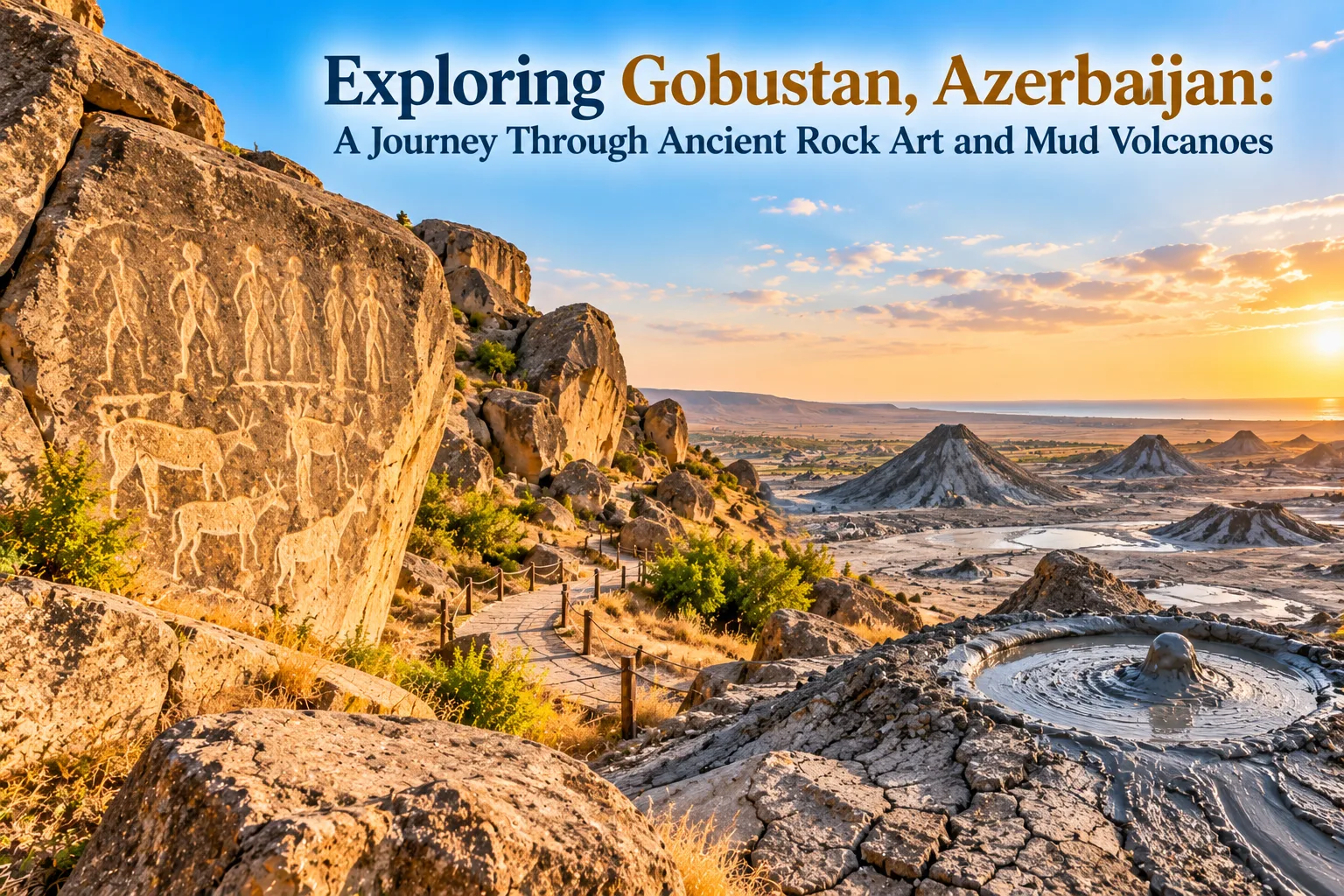
Exploring Gobustan: Where Ancient Humans Left Their Mark
Imagine standing on a vast, rocky landscape overlooking the Caspian Sea, surrounded by weathered cliffs and stones covered with drawings created thousands of years ago. This is Gobustan, one of Azerbaijan's most fascinating destinations for travelers interested in history, archaeology, geology, and unusual landscapes.
Located southwest of Baku, Gobustan is famous for its prehistoric rock carvings, ancient archaeological remains, and extraordinary mud volcanoes. The landscape may look harsh at first, but hidden among its rocks are stories of people who lived, hunted, danced, and worshipped here thousands of years ago.
For travelers looking beyond Azerbaijan's modern capital, exploring Gobustan offers a remarkable journey into the distant past.
Where Is Gobustan?


Gobustan is located in the Absheron-Gobustan region of Azerbaijan, roughly southwest of Baku.
The area is characterized by rocky hills, semi-desert landscapes, valleys, and unusual geological formations. Its proximity to the Caspian Sea helped make the region an important place for human settlement over long periods of history.
Today, visitors generally explore the archaeological landscape through Gobustan National Park, which protects some of the region's most significant prehistoric sites.
Why Is Gobustan Famous?
Gobustan is best known for two extraordinary features: its ancient petroglyphs and mud volcanoes.
The rock art provides evidence of prehistoric human activity in the region. Carvings depict animals, people, hunting scenes, boats, dances, and other elements of ancient life.
Meanwhile, Gobustan's mud volcanoes create an entirely different experience. Instead of flowing lava, these geological formations release mud, gases, and mineral-rich material from beneath the Earth's surface.
Together, these attractions make Gobustan a destination where archaeology and geology meet in one landscape.
1. Discover the Gobustan Rock Carvings
The highlight of any visit is undoubtedly the ancient rock art.
Across the rocky landscape, thousands of carvings have been documented. Many depict animals such as gazelles, wild cattle, goats, and other creatures that once inhabited the region.
Human figures are also represented. Some carvings appear to show hunting scenes, dancing, rituals, or everyday activities.
Walking among these rocks creates a strange sense of connection with the distant past. The drawings are simple compared with modern artwork, yet their meaning feels remarkably powerful.
Someone stood in this landscape thousands of years ago, picked up a sharp stone, and carved an image into the rock.
That simple act created a message that survived across generations.
2. Visit the Gobustan Rock Art Cultural Landscape
The Gobustan Rock Art Cultural Landscape is internationally recognized for its archaeological significance.
The protected area preserves an extraordinary collection of prehistoric rock engravings along with archaeological evidence of ancient human settlement.
Rather than viewing Gobustan as simply an outdoor museum, it is better understood as a cultural landscape. The rocks, caves, valleys, and surrounding environment all form part of the story.
As you explore, pay attention to how the carvings interact with their surroundings. Some are located on exposed rock surfaces, while others are found among natural shelters and rocky formations.
3. Explore the Gobustan Museum
Before heading into the archaeological sites, a visit to the Gobustan Museum can help put the landscape into context.
The museum provides information about prehistoric communities, archaeological discoveries, rock art, and the natural environment.
Displays and reconstructions help visitors understand how people may have lived in the region and how archaeologists interpret the evidence left behind.
If you are traveling with children or have limited knowledge of prehistoric archaeology, starting at the museum can make the outdoor visit much more meaningful.
4. Look for Ancient Hunting Scenes


One of the most fascinating aspects of Gobustan's petroglyphs is the depiction of animals and hunting.
Ancient hunters relied heavily on the surrounding environment for food and survival. Their artwork provides clues about the animals they encountered and the activities that were important to their communities.
Some scenes show hunters with weapons, while others feature groups of animals.
These carvings are more than decorative marks. They provide glimpses into how ancient people understood and interacted with their environment.
5. Discover the Famous Dancing Figures
Among Gobustan's many carvings, human figures are particularly intriguing.
Some appear to show people standing together or participating in activities that may have been connected with music, celebration, hunting, or ritual.
The famous Gaval Dash—a naturally resonant stone associated with the ancient landscape—is another fascinating element of Gobustan. When struck correctly, it can produce a distinctive sound.
For modern visitors, the combination of rock art and unusual natural acoustics raises fascinating questions about how prehistoric communities experienced this landscape.
6. Search for the Gaval Dash
The Gaval Dash is one of Gobustan's most unusual attractions.
This large stone is known for producing a resonant sound when struck with another stone. The phenomenon has contributed to theories about the role of sound and music in the ancient landscape.
Standing beside it offers a memorable sensory experience: instead of simply looking at an archaeological artifact, visitors can interact with a natural feature associated with the cultural history of the area.
It is another reminder that Gobustan was not simply a place where ancient people lived—it was a landscape they experienced through sight, sound, movement, and ritual.
7. Visit the Mud Volcanoes
After exploring ancient rock art, turn your attention toward one of Azerbaijan's most unusual geological attractions: mud volcanoes.
Azerbaijan is famous for having a remarkable concentration of mud volcanoes, and the landscapes around Gobustan offer opportunities to see these strange formations.
Unlike traditional volcanoes, mud volcanoes do not erupt molten rock. Instead, they can release mud, water, gases, and other materials from underground.
The result can look almost otherworldly.
Small cones rise from barren ground, while bubbling mud pools and cracked surfaces create a landscape that feels more like another planet than the outskirts of Baku.
8. Enjoy the Desert-Like Landscape
Gobustan is not a lush destination. Its beauty comes from its rugged simplicity.
Brown hills, exposed rocks, dry valleys, and wide skies dominate the scenery. In certain places, the landscape stretches toward the Caspian Sea, creating expansive views.
This makes Gobustan particularly attractive to photographers.
The best photographs often come from focusing on contrasts: ancient carvings against rough stone, tiny human figures against enormous hills, or bubbling mud volcanoes surrounded by barren terrain.
9. Learn About Ancient Life Around the Caspian Sea
Gobustan also provides an opportunity to think about how landscapes change over time.
The Caspian region has experienced significant environmental and climatic changes throughout history. Ancient communities adapted to the resources available around them, including animals, plants, water sources, and coastal environments.
The archaeological evidence preserved at Gobustan allows researchers to study these long-term relationships between humans and their environment.
For travelers, this makes the site more than a collection of ancient drawings. It becomes a window into the changing relationship between people and the landscape.
Best Time to Visit Gobustan
The best time for exploring Gobustan is generally during the cooler months of spring and autumn.
Spring can bring pleasant temperatures and occasional greenery to the otherwise dry landscape.
Summer can be extremely hot, particularly when walking across exposed rocky areas. If visiting during summer, start early, carry sufficient water, and protect yourself from the sun.
Autumn provides comfortable conditions for outdoor exploration.
Winter can also be interesting, particularly on clear days, although weather conditions can be cooler and windier.
Because much of the experience takes place outdoors, checking the weather before visiting is worthwhile.
How to Get to Gobustan
Gobustan is accessible from Baku by road, making it a popular day-trip destination.
Many travelers visit as part of an organized excursion that combines the rock carvings, museum, and nearby mud volcanoes.
Independent travelers can also arrange private transportation or a rental car.
Because the archaeological sites and mud volcano areas are spread across the wider region, having reliable transportation can make the experience easier.
What to Bring to Gobustan
A visit to Gobustan is relatively straightforward, but a few items can make the trip more comfortable:
Comfortable walking shoes
Drinking water
Sunscreen
Sunglasses
A hat
Light, breathable clothing during warm months
A camera or smartphone
Extra layers during cooler seasons
The terrain can be rocky and uneven, so comfortable footwear is especially important.
Gobustan and the Ancient Silk Road World
Although Gobustan is not simply a Silk Road destination in the conventional sense, its location in Azerbaijan connects it to the wider history of movement between Europe and Asia.
Azerbaijan has long occupied a strategic position between the Caucasus, the Caspian Sea, Central Asia, and the Middle East.
Visiting Gobustan alongside Baku, ancient caravan routes, mountain villages, and other historical sites can help travelers understand Azerbaijan's position at the crossroads of cultures.
Tips for a Memorable Gobustan Experience
To get more from your visit, avoid rushing.
Start with the museum to understand the archaeological background. Then explore the petroglyphs slowly and look carefully at the details.
A guide can also be useful, particularly if you want to understand the meanings and archaeological interpretations associated with individual carvings.
Most importantly, remember that Gobustan is a protected cultural landscape. Avoid touching or damaging the carvings and follow local site regulations.
Final Thoughts: Why Explore Gobustan?
Exploring Gobustan is like stepping into an open-air history book.
Here, prehistoric people left drawings on stone, ancient communities interacted with a changing environment, and geological forces continue to shape the land beneath their feet.
From the mysterious Gobustan rock carvings to the strange mud volcanoes, the region offers an experience that combines history, archaeology, geology, and adventure.
For travelers visiting Azerbaijan, Gobustan provides something very different from the grand architecture and modern energy of Baku. It is raw, ancient, rugged, and wonderfully unusual.
If you want to discover a place where the landscape itself tells a story, Gobustan is a destination worth adding to your Azerbaijan itinerary.