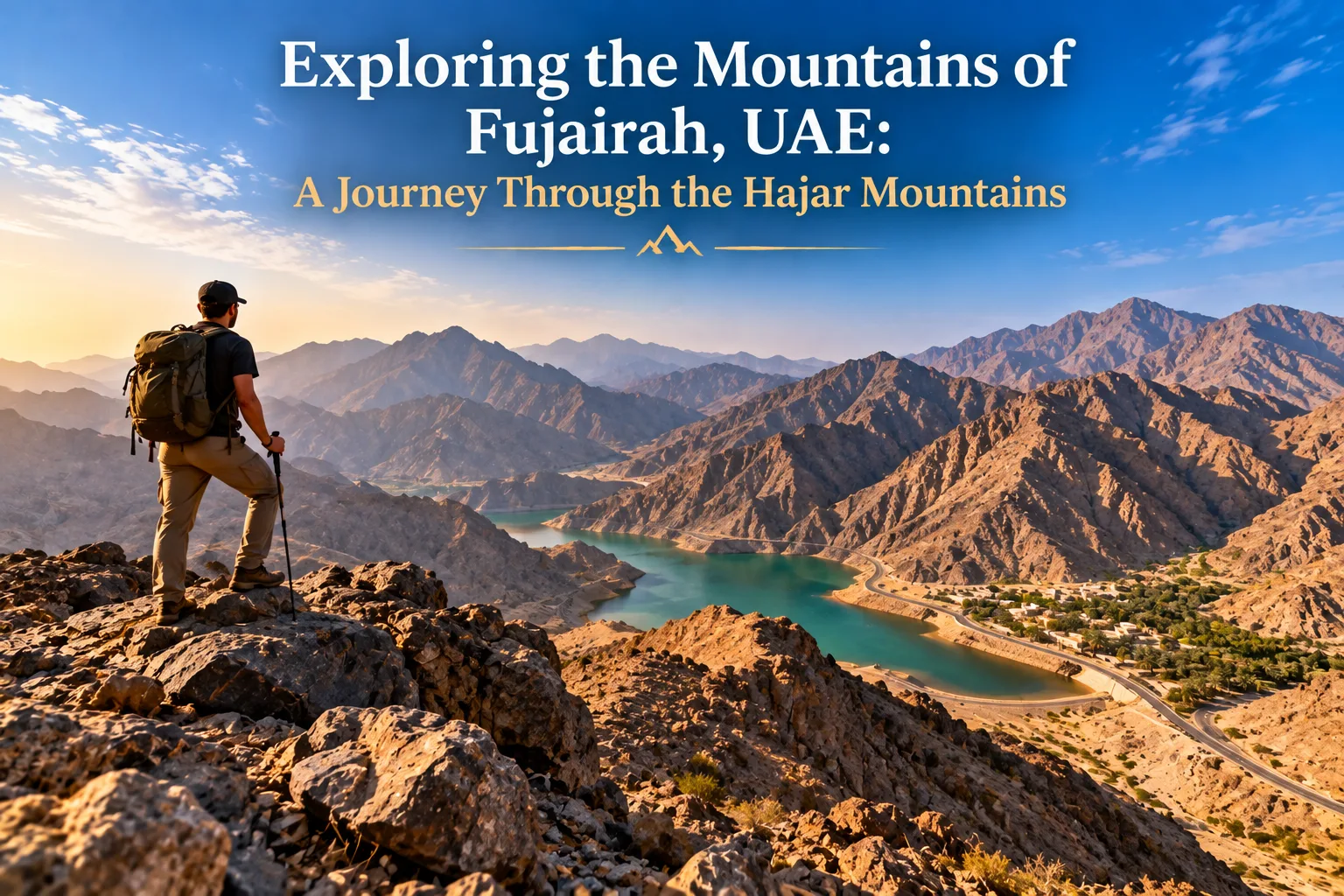
Exploring the Mountains of Fujairah, UAE: A Journey Through the Hajar Mountains
Introduction: Discover the Mountain Side of FujairahWhen many travelers imagine the United Arab Emirates, they picture modern skyscrapers, luxurious resorts, and vast desert landscapes. Fujairah offers something complete...
Introduction: Discover the Mountain Side of Fujairah
When many travelers imagine the United Arab Emirates, they picture modern skyscrapers, luxurious resorts, and vast desert landscapes. Fujairah offers something completely different.
Located on the UAE's eastern coast, Fujairah is the country's only emirate situated entirely along the Gulf of Oman. Much of its interior is dominated by the rugged Hajar Mountains, creating a spectacular landscape of rocky peaks, deep valleys, traditional villages, and seasonal wadis.
For adventure seekers, exploring the Fujairah Mountains is an opportunity to discover a quieter side of the UAE. Hiking trails wind through valleys, ancient irrigation channels cross mountain settlements, and dramatic viewpoints reveal the relationship between the mountains and the coast.
Whether you enjoy trekking, photography, camping, geology, or cultural exploration, Fujairah's mountains offer plenty of reasons to venture beyond the beach.
Why Explore the Fujairah Mountains?


The mountains around Fujairah are part of the Hajar range, which forms a dramatic natural backdrop across the emirate.
Unlike the vast sandy deserts associated with other parts of the UAE, Fujairah is characterized by exposed rock, steep valleys, gravel plains, and mountain wadis. The official Fujairah tourism site describes the emirate as a destination where visitors can combine mountains, wadis, villages, beaches, and historic sites.
A mountain adventure here can include:
Hiking through rocky valleys
Exploring traditional villages
Discovering ancient falaj irrigation channels
Searching for fossils and geological formations
Visiting historic forts
Camping beneath mountain skies
Photographing dramatic landscapes
Exploring freshwater pools after rainfall
The variety makes Fujairah especially appealing to travelers who want more than a conventional UAE city break.
Hiking in the Hajar Mountains


Hiking is one of the best ways to experience Fujairah's mountainous landscape.
Fujairah Tourism lists trails suitable for different experience levels, ranging from relatively gentle walks to demanding mountain routes. Popular options include Wadi Tayyibah, Wadi Maidaq, Wadi Khabb, Al Tawyeen, and Al Sharya.
Wadi Tayyibah Trail
Wadi Tayyibah is an excellent choice for travelers who want to combine nature and culture.
The route passes through mountain scenery and follows an ancient falaj, a traditional irrigation channel. Rock pools may also form after rainfall, adding another dimension to the landscape.
The surrounding valleys provide opportunities to see how local communities have historically adapted to life in an arid mountain environment.
Wadi Maidaq
Wadi Maidaq offers a more exploratory experience, with caves and fossils among its attractions.
Walking through this type of landscape gives visitors a chance to appreciate the geological character of the Hajar Mountains. The rocks are not simply scenery—they are part of a much older natural history.
Wadi Khabb and Jebel Yibir
Experienced trekkers can consider routes through Wadi Khabb toward Jebel Yibir, which Fujairah Tourism highlights for its spectacular mountain views.
This type of trek is better suited to hikers who are comfortable with rugged terrain, elevation changes, and remote mountain environments.
Discover Wadi Al Wurayah
One of the most remarkable natural areas in Fujairah is Wadi Al Wurayah.
Located in the Hajar Mountains, the protected wadi contains springs, valleys, pools, and diverse flora and fauna. Fujairah Tourism describes the area as a fragile ecosystem that visitors should help preserve.
The wadi is particularly interesting because water creates pockets of life among the otherwise dry mountain landscape.
Wadi Wurayah has also undergone important changes in visitor access. In 2026, controlled public visits were introduced after a period when the area had largely been protected from general access. Visitors should therefore check current access arrangements and use authorized tours or routes.
For nature lovers, this makes Wadi Wurayah an especially valuable destination within Fujairah's mountain environment.
Explore Al Hayl Village and Its Historic Fort
The Fujairah Mountains are not only about outdoor adventure. They also contain important traces of the region's cultural history.
Al Hayl Fort and Village are located in Wadi Al Hayl, approximately 13 kilometers southwest of Fujairah City. The historic fort and watchtower occupy elevated positions overlooking the surrounding valley.
The location demonstrates why mountain settlements were strategically important. From elevated viewpoints, residents could observe routes passing through the valleys and surrounding countryside.
Exploring the area allows travelers to combine a mountain excursion with a glimpse into Fujairah's architectural heritage.
Experience the Landscape of Wadi Al Helo
Although Wadi Al Helo lies in the neighboring Sharjah Emirate rather than Fujairah itself, it is part of the broader Hajar Mountain environment and can be relevant to travelers exploring the UAE's eastern mountain region.
The name means "sweet valley," and the area is known for underground water, archaeological sites, wildlife, and scenic hiking trails.
The contrast is striking: rugged mountains surround pockets of vegetation and water, creating a landscape that feels unexpectedly green in an otherwise arid region.
Mountain Camping in Fujairah
For travelers who want to spend more time in the mountains, camping provides a memorable way to experience the landscape.
Fujairah Tourism identifies designated mountain camping areas, including sites around Jebel Yibir, the plateau between Wadi Sana and Wadi Sidr, and the mountainous Al Tawyeen region.
Imagine ending a hiking day as the sun disappears behind the rocky peaks. As darkness arrives, the mountains become silhouettes and the sky opens above the campsite.
Mountain camping also offers an opportunity to experience Fujairah away from the busy coastal areas.
Always check current camping regulations and use designated areas where required.
The Best Time to Explore Fujairah Mountains
Timing is particularly important for mountain adventures in the UAE.
The cooler months are generally more comfortable for hiking and outdoor exploration. October through April is widely considered a better period for outdoor activities, while the hottest summer months can make exposed mountain routes extremely demanding.
Early morning is another excellent option.
Starting before the heat intensifies allows you to enjoy cooler temperatures, softer light, and quieter trails.
Before any hike, check weather conditions carefully. Mountain weather can differ from conditions in Fujairah City, and wadis can become dangerous during heavy rainfall.
What to Bring on a Fujairah Mountain Hike
A well-prepared hiker can enjoy the mountains much more comfortably.
Pack:
Plenty of drinking water
Hiking shoes with good grip
Lightweight, breathable clothing
Sun protection
Hat and sunglasses
High-energy snacks
First-aid supplies
Fully charged phone
Power bank
Offline maps or GPS
Headlamp for longer hikes
Extra layers during cooler months
For remote or technically difficult trails, traveling with an experienced hiking guide is strongly recommended.
Fujairah Tourism specifically suggests expert assistance for more challenging routes such as the Al Sharya Trails.
Stay Safe in the Mountains
The beauty of the Hajar Mountains can make the terrain look deceptively accessible.
Loose rocks, steep slopes, heat, and limited shade can turn a simple-looking route into a demanding hike.
Follow these basic principles:
Choose a trail appropriate for your fitness level.
Start early to avoid the strongest heat.
Carry more water than you think you will need.
Stay on established routes where possible.
Do not hike alone in remote terrain.
Check weather forecasts before entering a wadi.
Never enter a wadi during heavy rain or when flash flooding is possible.
Tell someone about your hiking plans.
Respect wildlife and local communities.
Take all rubbish with you.
Safety becomes especially important when exploring remote valleys where mobile coverage may be limited.
Fujairah Mountains and the Coast: The Perfect Combination
One of the biggest advantages of traveling in Fujairah is the short distance between mountains and sea.
After a morning hike through the Hajar Mountains, you can return toward the coast and enjoy the Gulf of Oman.
Fujairah's coastal waters are also known for diving, snorkeling, swimming, and marine activities. The combination of mountains and ocean allows travelers to create a varied itinerary without spending hours moving between destinations.
This makes Fujairah particularly attractive for travelers who enjoy both adventure and relaxation.
A Photographer's Paradise
The Fujairah Mountains offer countless opportunities for landscape photography.
Look for:
Jagged mountain ridges
Narrow canyon entrances
Wadi pools
Palm plantations
Ancient villages
Forts against mountain backdrops
Sunrise over the Hajar peaks
Sunset shadows across rocky valleys
Early morning and late afternoon are especially beautiful because the low-angle sunlight emphasizes the texture of the rocks.
A wide-angle lens is useful for capturing the scale of the valleys, while a telephoto lens can isolate distant ridges and villages.
Responsible Tourism in Fujairah's Mountains
Fujairah's mountain ecosystems are fragile.
This is particularly evident at Wadi Al Wurayah, where protected habitats contain unique flora and fauna. Fujairah Tourism explicitly asks visitors to leave the area as they found it.
Responsible travelers should:
Avoid leaving litter.
Do not damage plants or geological formations.
Keep noise levels low.
Avoid disturbing wildlife.
Respect archaeological sites.
Stay on designated paths when required.
Avoid driving off-road through sensitive habitats.
Follow local access regulations.
The goal is simple: enjoy the mountains without leaving a negative footprint.
Why Fujairah Is Worth Discovering
The real charm of Fujairah lies in its contrast.
One moment you can be walking through a rugged mountain valley. Later, you can discover an old fort or village. By afternoon, you can be beside the Gulf of Oman, and at night, you can camp beneath a sky filled with stars.
The mountains also reveal a side of the UAE that is easy to overlook.
Instead of skyscrapers and highways, you find stone, water, history, wildlife, and traditional mountain communities.
Final Thoughts
Exploring the Fujairah Mountains is an excellent way to discover one of the UAE's most dramatic natural landscapes. The Hajar Mountains provide opportunities for hiking, camping, photography, cultural exploration, and encounters with unique wadi ecosystems.
From the scenic trails of Wadi Tayyibah and Wadi Maidaq to the protected environment of Wadi Al Wurayah and the historic landscapes around Al Hayl, Fujairah offers experiences for both casual explorers and experienced trekkers.
If you are looking for an adventure beyond the UAE's famous cities and beaches, head east toward the mountains.
In Fujairah, the journey into the Hajar Mountains is where the real adventure begins.