Learning to Make the Traditional Wau Bulan Kite in Malaysia: A Hands-On Cultural Experience
Introduction: Discover Malaysia’s Traditional Wau Bulan KiteMalaysia is a country where traditional craftsmanship remains an important part of its cultural identity. From intricate batik textiles to handwoven baskets, lo...
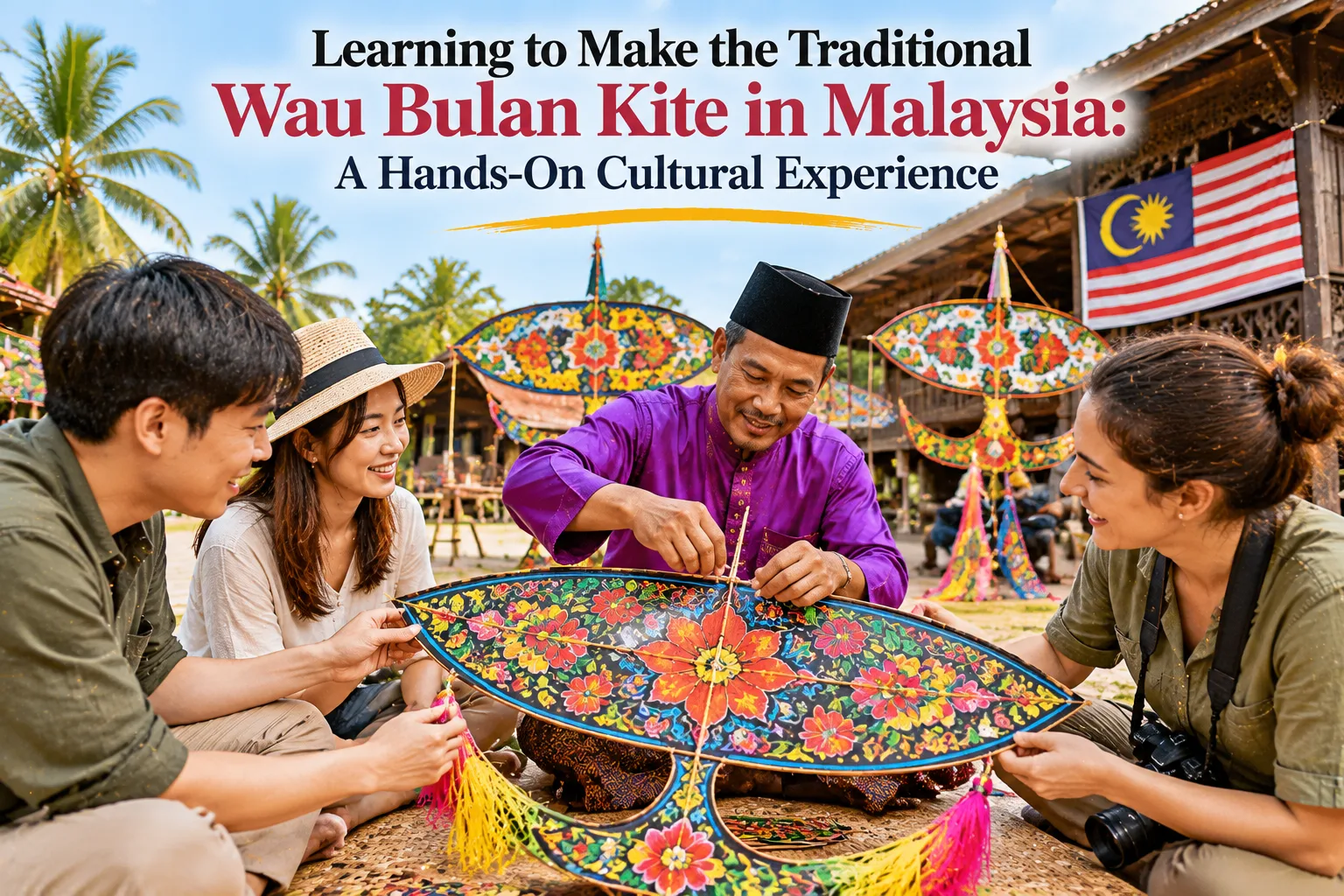
Learning to Make the Traditional Wau Bulan Kite in Malaysia: A Hands-On Cultural Experience
Introduction: Discover Malaysia’s Traditional Wau Bulan Kite
Malaysia is a country where traditional craftsmanship remains an important part of its cultural identity. From intricate batik textiles to handwoven baskets, local artisans preserve techniques that connect modern communities with generations of knowledge. Among these beautiful traditions, the Wau Bulan kite stands out as one of Malaysia’s most recognizable cultural symbols.
Known for its distinctive crescent-moon shape, elaborate floral decorations, and vibrant colors, the Wau Bulan is particularly associated with Kelantan on Malaysia’s east coast. Unlike ordinary recreational kites, these traditional creations combine artistic design, careful construction, and practical knowledge of balance and airflow.
For travelers seeking an authentic cultural activity, learning to make a Wau Bulan kite at a local craft workshop offers an opportunity to experience Malaysian heritage through direct participation. Instead of simply purchasing a finished souvenir, visitors can work alongside skilled artisans, learn about traditional materials, and discover the patience required to create a beautifully balanced kite.
Depending on the workshop, participants may help shape a bamboo frame, attach the kite covering, paint decorative motifs, or assemble a smaller version to take home. The experience is suitable for curious travelers, families, art enthusiasts, and anyone interested in traditional Asian handicrafts.
1. Understanding the Cultural Significance of Wau Bulan

The name Wau Bulan combines the Malay word wau, referring to a traditional kite, with bulan, meaning moon. Its curved upper outline resembles a crescent moon, giving the kite its distinctive appearance.
Traditional wau-making is strongly associated with Kelantan and other parts of Malaysia's east coast. Historically, kite flying was connected with rural life, seasonal activities, community gatherings, and friendly competitions. The craft developed into a sophisticated art form in which makers combined practical engineering with decorative creativity.
The Wau Bulan's elaborate patterns often feature flowers, leaves, and other stylized natural forms. These designs may be painted or applied using traditional decorative techniques, depending on the maker and the particular style of kite.
Although the crescent shape is its most recognizable feature, the kite's beauty comes from the relationship between its frame, covering, patterns, and proportions. Each component contributes to the finished design.
Today, Wau Bulan kites appear at cultural festivals, craft exhibitions, tourism events, and traditional kite-flying gatherings. They are also valued as decorative objects that represent Malaysian artistic heritage.
Joining a workshop helps visitors understand that the Wau Bulan is more than a colorful object. It is an example of how local knowledge, artistic expression, and practical skills can be passed from one generation to another.
2. Visiting a Traditional Kite-Making Workshop in Malaysia
A Wau Bulan workshop is an excellent place to begin exploring the craft. Kelantan is a particularly relevant destination because of its longstanding association with traditional kite-making, although workshops and cultural demonstrations may also be available elsewhere in Malaysia.
Look for a session led by an experienced artisan or a community craft organization that welcomes visitors. Some workshops focus on demonstrations, while others allow participants to create a small kite with guidance.
When you arrive, the instructor may introduce the traditional tools, materials, and different stages of construction. You may see completed kites displayed alongside unfinished frames, decorative templates, paintbrushes, and bundles of bamboo.
The workshop atmosphere is often more relaxed than a formal class. Artisans may explain how they learned the craft, how designs have changed over time, and why certain construction methods remain important.
Before booking, ask what the session includes. A full-size traditional kite can require considerable skill and time, so a short visitor workshop may concentrate on a miniature model or selected construction steps rather than producing a competition-ready kite.
This is part of the experience: learning the craft realistically, appreciating the artisan's expertise, and discovering how much work goes into the finished product.
3. Learning How to Build the Wau Bulan Frame

One of the most fascinating parts of Wau Bulan kite making is constructing its lightweight frame. The frame determines the kite's overall shape and helps it remain stable when exposed to the wind.
Selecting and preparing the materials
Traditional kite makers often use lightweight bamboo for the structural framework because it can provide a useful balance between flexibility and strength. The covering may be made from paper or other suitable lightweight materials, depending on the maker's technique.
The artisan may explain how bamboo strips are selected, prepared, and shaped. Their thickness and flexibility matter because the frame must support the kite without becoming unnecessarily heavy.
For beginners, the instructor will typically prepare potentially sharp tools and delicate materials in advance.
Creating the crescent-moon shape
The curved outline is one of the most distinctive features of the Wau Bulan. Carefully shaped bamboo pieces are arranged to create the kite's recognizable silhouette.
Participants may help position prepared strips, hold components in place, or observe how the artisan adjusts the curves. Achieving a balanced frame requires experience because small differences in shape can affect the kite's stability.
Adding the internal supports
The frame also needs internal structural pieces to maintain its shape. These supports must be positioned carefully so the finished kite remains sufficiently rigid while retaining the flexibility needed for flight.
The instructor may demonstrate how the different components fit together and explain why symmetry and weight distribution matter.
For travelers who enjoy hands-on activities, this stage offers an interesting combination of traditional craftsmanship and basic aerodynamics. It shows how artisans develop practical solutions using relatively simple materials and considerable experience.
4. Decorating the Kite With Traditional Malaysian Patterns

Once the frame is ready, decoration transforms the kite into a distinctive work of art. This stage is often a highlight for visitors because it allows them to explore color, pattern, and personal creativity.
Traditional Wau Bulan designs frequently feature intricate floral arrangements and stylized botanical motifs. The patterns may be symmetrical, with decorative elements spreading outward from a central design.
Choosing colors and motifs
Bright colors such as red, yellow, green, and blue are commonly seen on decorative wau designs, although individual artisans have their own palettes and preferences.
Your instructor may explain how traditional patterns are planned and how different colors are combined to create contrast. You may also learn why repeated shapes and balanced arrangements are important to the finished appearance.
Practicing the decorative techniques
Depending on the workshop, participants may sketch simple motifs, paint a prepared kite covering, or decorate a miniature Wau Bulan.
Beginners do not need advanced artistic skills. The purpose is to understand the process and appreciate the precision involved in traditional decoration.
Small details can make a significant difference. A carefully outlined flower or a repeated leaf pattern can give the kite depth and visual rhythm.
Attaching the covering
After the design is completed and sufficiently dry, the covering is carefully attached to the frame. The artisan may explain how to keep the material smooth and how excess weight or uneven attachment can affect performance.
This step demonstrates why kite making involves more than painting a beautiful design. The covering must work together with the frame to create a functional object.
5. Understanding the Science Behind Traditional Kite Making
Although the Wau Bulan is a traditional handicraft, its construction also demonstrates basic principles of physics.
For a kite to fly successfully, several factors must work together:
Balance: The frame and covering must distribute weight appropriately.
Aerodynamics: The kite's shape and angle help it interact with the moving air.
Wind conditions: Suitable wind is necessary to lift the kite and keep it airborne.
Stability: The frame, bridle, and tail or other stabilizing features must suit the design.
Material selection: Lightweight materials help reduce the force needed to lift the kite.
The exact setup varies between kite designs, and traditional wau may require specialized adjustments that an experienced maker understands through practice.
During a workshop, ask the artisan how they test a kite before flying it. Their answer may reveal how practical knowledge is developed through repeated experimentation rather than theory alone.
This combination of art and engineering makes Wau Bulan kite making particularly rewarding for visitors interested in traditional technology and sustainable craft practices.
6. Flying Your Handmade Wau Bulan Kite

If the workshop offers a flying demonstration, watching a completed Wau Bulan rise into the sky can be a memorable way to conclude the experience.
The kite's curved silhouette and colorful patterns become especially striking when viewed against an open sky. After spending time learning about the frame and decoration, seeing the finished object in flight helps connect every stage of the process.
Some workshops may allow participants to fly a small kite under supervision, depending on the weather, available space, and the type of kite produced.
Choose an open field away from roads, power lines, buildings, and crowded areas. Follow the instructor's guidance, and avoid flying during thunderstorms or strong, unpredictable winds.
A traditional Wau Bulan can also be enjoyed as a decorative object if flying conditions are unsuitable. The finished kite remains a reminder of the craft and the people who shared their knowledge.
7. Practical Tips for Joining a Wau Bulan Kite-Making Workshop
A little preparation can make your cultural experience more enjoyable.
Travel tip
Recommendation
Where to go
Start by researching traditional kite-making workshops in Kelantan.
Booking
Contact the artisan or organizer in advance to confirm availability.
Duration
Allow approximately 1–3 hours for a beginner session, depending on the program.
Cost
Confirm workshop fees, materials, and whether a finished kite is included.
Clothing
Wear comfortable clothes suitable for a hands-on craft activity.
Photography
Ask permission before photographing artisans or their work in progress.
Language
Ask whether instruction is available in English or through a local guide.
Flying conditions
Confirm whether the session includes a kite-flying demonstration.
These are planning suggestions rather than guaranteed workshop arrangements. Session length, materials, prices, and activities vary between providers.
If you are visiting during a local cultural festival, you may also find kite exhibitions or demonstrations. Confirm dates and public access before including them in your itinerary.
8. Why Wau Bulan Kite Making Is a Meaningful Cultural Experience
Many travel activities allow visitors to admire a destination's culture, but traditional craft workshops offer something more personal: the opportunity to learn by doing.
Making a Wau Bulan introduces you to Malaysian heritage through materials, patterns, stories, and practical skills. You begin to appreciate the time required to shape bamboo, balance the structure, and decorate the covering.
The experience can also support the continuation of traditional craftsmanship when workshops are led by local artisans and participants pay fair fees for their time and expertise.
For families, it offers an engaging way to explore creativity and basic science together. For photographers and art enthusiasts, it provides insight into the colors and patterns of Malaysian folk art. For independent travelers, it offers a welcome opportunity to meet craftspeople and discover traditions beyond the usual sightseeing itinerary.
Most importantly, the activity encourages a slower approach to travel. Instead of rushing between attractions, you spend time learning a skill, asking questions, and appreciating the knowledge behind an everyday cultural object.
Final Thoughts
Learning to make the traditional Wau Bulan kite at a Malaysian craft workshop is a memorable way to connect with the country's cultural heritage. From shaping the crescent-shaped bamboo frame to painting intricate floral motifs, each stage reveals the creativity, patience, and practical knowledge that sustain this distinctive art form.
For travelers interested in authentic cultural experiences, Wau Bulan kite making offers a wonderful balance of education, creativity, and local interaction. If your workshop includes a supervised flying session, watching your handmade kite catch the breeze can provide a particularly satisfying conclusion.
Whether you visit Kelantan specifically for its kite-making traditions or discover the craft during a wider journey through Malaysia, take the opportunity to learn directly from local artisans. Their knowledge helps transform a simple kite into a meaningful expression of Malaysian identity.
A Wau Bulan is more than a kite—it is a piece of living heritage that brings together art, engineering, community, and the joy of flying.