Observing a Traditional Lethwei Training Session in Myanmar: An Authentic Cultural Experience
Introduction: Discover the Spirit of Myanmar Through LethweiTraveling through Myanmar offers opportunities to discover traditions that extend far beyond famous temples, historic cities, and scenic landscapes. One particu...
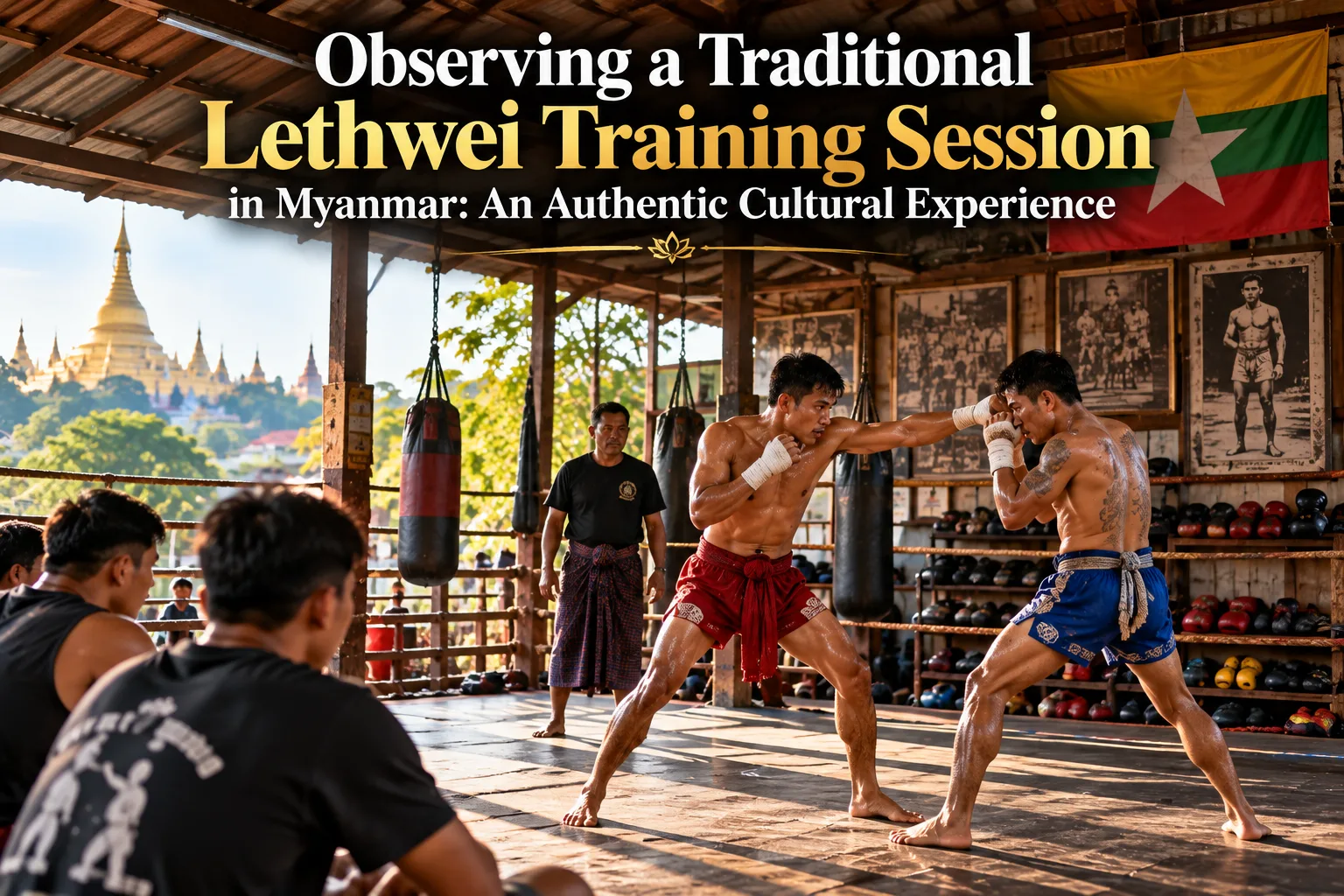
Observing a Traditional Lethwei Training Session in Myanmar: An Authentic Cultural Experience
Introduction: Discover the Spirit of Myanmar Through Lethwei
Traveling through Myanmar offers opportunities to discover traditions that extend far beyond famous temples, historic cities, and scenic landscapes. One particularly fascinating experience is observing a traditional Lethwei training session at a local martial arts club, provided that the gym is accessible and the visit can be arranged safely.
Known internationally as Burmese bare-knuckle boxing, Lethwei is one of Myanmar’s most distinctive traditional martial arts. It combines powerful striking techniques, physical conditioning, discipline, and a strong connection to the country's sporting heritage. For local athletes, training is more than physical exercise. It is an opportunity to develop resilience, learn from experienced instructors, and preserve a tradition passed down through generations.
For travelers interested in authentic cultural experiences, watching a Lethwei practice session provides a closer look at everyday life in a martial arts community. Rather than simply watching a public competition, visitors may observe the preparation, teamwork, and dedication that take place behind the scenes.
The key is to approach the experience with respect, realistic expectations, and an understanding that a working gym is first and foremost a training environment—not a tourist attraction.
1. Understanding the History and Cultural Significance of Lethwei

Lethwei has deep roots in Myanmar's cultural and sporting history. Often described as the “art of nine limbs,” it uses the fists, elbows, knees, shins, and head in striking techniques. This distinguishes traditional Lethwei from many other combat sports, although individual competitions may follow different rules.
Historically, Burmese boxing developed through local fighting traditions and became an important part of sporting festivals, community gatherings, and organized competitions. Over time, Lethwei gained a wider audience while retaining its distinct identity.
A local training club offers an opportunity to understand how this heritage continues in the present day. Experienced fighters may share the space with beginners, young athletes, and people training simply to improve their fitness. Coaches play an important role in teaching technique, maintaining discipline, and preparing students for competition.
For visitors, the cultural significance lies not only in the martial art itself but also in the relationships that sustain it. Watching an instructor correct a student's stance or encourage a tired athlete can reveal the patience and commitment behind the sport.
It is also important to remember that not every gym follows exactly the same training methods. Traditions, equipment, coaching styles, and levels of competition can vary between clubs.
2. What to Expect During a Lethwei Training Session

A typical Lethwei training session can be energetic, demanding, and highly structured. If you visit a club with the instructor's permission, you may be able to observe several stages of practice.
Warm-up and physical conditioning
Training often begins with skipping, jogging, mobility exercises, bodyweight movements, and other conditioning drills. These activities help prepare athletes for the physical demands of striking and footwork.
You may notice that experienced fighters follow routines with remarkable consistency. Repetition is an essential part of developing balance, endurance, coordination, and control.
Technical drills and pad work
After warming up, athletes may practice combinations of punches, kicks, elbows, and knees using pads or bags. Coaches watch closely, correcting movements and demonstrating how to generate power while maintaining balance.
This is often one of the most interesting stages for visitors because it reveals the technical side of Lethwei. Although the sport can appear aggressive during competition, effective training also depends on timing, precision, defensive awareness, and discipline.
Controlled sparring
Some sessions include sparring between training partners. The intensity depends on the gym, the athletes' experience, and the day's objectives.
Sparring is not guaranteed to be part of every visit, and visitors should never expect a club to stage a demonstration for them. If sparring takes place, observe quietly from the designated spectator area and follow all instructions from the coach.
Coaching and recovery
Training may conclude with feedback, stretching, recovery exercises, or informal discussions between athletes and instructors.
These quieter moments can be just as revealing as the physical drills. They show the importance of mutual trust, sportsmanship, and learning within the club.
3. Traditional Equipment and Training Techniques

One detail worth observing is the equipment used by fighters. Depending on the club and the type of training, you may see heavy bags, focus mitts, protective equipment, hand wraps, and other basic gym supplies.
Traditional Lethwei is associated with bare-knuckle competition, but training practices are not necessarily the same as competition rules. Fighters may use gloves or other protective equipment during drills and sparring, according to the coach's safety policies.
Watch how athletes wrap and prepare their hands, check their equipment, and maintain their training space. These routines help illustrate the preparation required before physical practice begins.
Footwork is another important element. Fighters repeatedly shift their weight, adjust their distance, and practice entering and leaving striking range. Even simple drills can demand substantial concentration.
Visitors should resist the temptation to imitate techniques without supervision. Lethwei involves potentially dangerous strikes, and attempting them without proper instruction can cause serious injuries. Observing an experienced coach is a safer and more rewarding way to learn about the art.
4. How to Arrange a Safe and Respectful Visit
A traditional martial arts club is an active workplace for its athletes and instructors. A successful visit starts with finding a legitimate host and agreeing on the conditions beforehand.
Contact the club in advance. Ask whether visitors are welcome and whether a short observation session is possible.
Use reputable local contacts. A trusted cultural guide or established tour operator may help arrange an introduction.
Confirm current access conditions. Travel conditions in Myanmar can vary significantly by location and over time. Check current official travel advice and obtain local guidance before making plans.
Follow the coach's instructions. Remain in approved viewing areas and never enter the training space without permission.
Ask before taking photographs. Obtain permission from the coach and any identifiable athletes. Respect anyone who prefers not to be photographed.
Dress appropriately. Choose modest, comfortable clothing and suitable footwear, following the gym's requirements.
Do not interrupt training. Save questions for a break or for a time agreed upon with the instructor.
Most importantly, do not assume that a gym is open to visitors simply because it appears on a map or social media. If a club cannot confirm safe access, postpone the visit or choose another cultural activity.
5. Learning from Local Coaches and Athletes
One of the most meaningful aspects of observing Lethwei is the opportunity to learn directly from people who practice it.
If the instructor has time, you might ask how they began training, what qualities they value in a fighter, or how the club introduces newcomers to the sport. These conversations can help explain the relationship between physical preparation, mental discipline, and community.
Consider asking questions such as:
How do beginners typically start learning Lethwei?
What is the most challenging part of training?
How do coaches help athletes develop discipline and respect?
How has the club's training approach changed over time?
Keep your questions open-ended and allow the coach to decide what they are comfortable discussing. Avoid treating athletes as performers or asking them to demonstrate dangerous techniques solely for photographs.
If a club offers an introduction to Lethwei's history or basic terminology, take the opportunity to learn. Even a short conversation can provide context that makes the entire experience more memorable.
6. Why This Experience Is Worth Including in a Myanmar Travel Itinerary
Observing a traditional Lethwei training session offers a different perspective on Myanmar. While historic landmarks reveal aspects of the country's past, a working martial arts club provides a glimpse into a living sporting tradition.
The experience may appeal to several types of travelers:
Cultural travelers: Discover a traditional martial art through the people who practice and teach it.
Sports enthusiasts: Observe striking techniques, conditioning routines, and coaching methods.
Responsible travelers: Support a local club through an agreed visitor fee or other arrangement, where offered.
Curious learners: Explore the values of perseverance, teamwork, respect, and continuous improvement.
A visit does not need to be long to be worthwhile. Observing a warm-up, watching pad work, and listening to a coach explain the sport may provide a richer understanding than simply seeing a competition.
Remember that a genuine cultural experience does not require access to every part of a community's life. Respecting the gym's boundaries is part of appreciating its traditions.
7. Practical Travel Tips for the Best Experience
Before planning your visit, consider these practical recommendations:
Travel consideration
Recommendation
Best time to visit
Arrange a session directly with the club; training schedules vary.
Duration
Allow around 1–2 hours if the host agrees.
Cost
Ask whether an observation fee, guide fee, or donation is expected.
Photography
Obtain permission before taking photos or recording video.
Safety
Stay outside the training area unless specifically invited and supervised.
Accessibility
Confirm the venue's access arrangements and facilities in advance.
Travel planning
Check current local conditions and official travel advisories.
Do not build a tight itinerary around an unconfirmed training session. Local clubs may change schedules for competitions, holidays, private coaching, or other reasons.
If you cannot arrange a safe visit, consider an established cultural presentation or a public Lethwei event when one is available and safe to attend.
Final Thoughts
Observing a traditional Lethwei training session at a local club can be a memorable way to explore Myanmar's sporting heritage. Beyond the powerful strikes and demanding conditioning, the experience reveals the dedication of athletes, the guidance of coaches, and the discipline required to develop a traditional martial art.
The most rewarding visit is one arranged with the club's consent, conducted with respect for athletes' privacy, and guided by sensible safety precautions. You may leave with a better understanding of Lethwei, but also with a deeper appreciation of the people who keep this tradition alive.
For travelers seeking meaningful cultural encounters, watching Lethwei training in Myanmar is an opportunity to learn from a living tradition rather than simply observe it from a distance. When access is appropriate and safe, it can become a distinctive highlight of a journey through the country's rich cultural landscape.