Observing Caspian Seals Through a Wildlife Monitoring Program in Azerbaijan
The Caspian Sea is home to one of the world's most fascinating and least-known marine mammals: the Caspian seal. Found nowhere else in the wild, this remarkable species offers nature lovers a unique reason to explore Aze...
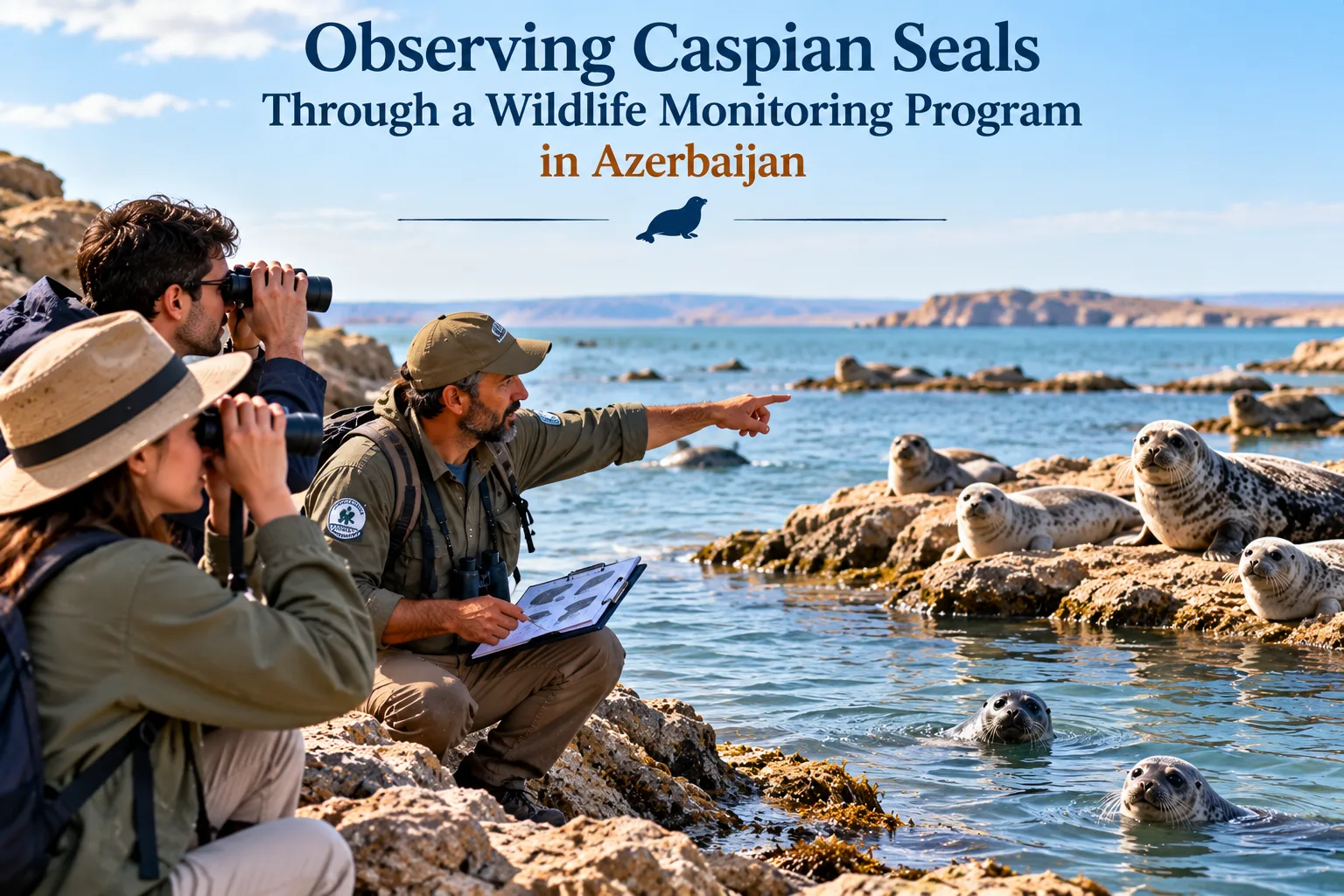
Observing Caspian Seals Through a Wildlife Monitoring Program in Azerbaijan

The Caspian Sea is home to one of the world's most fascinating and least-known marine mammals: the Caspian seal. Found nowhere else in the wild, this remarkable species offers nature lovers a unique reason to explore Azerbaijan's coastal landscapes and discover the importance of marine conservation.
Observing Caspian seals through a wildlife monitoring program in Azerbaijan can provide a meaningful travel experience that combines wildlife watching, scientific learning, and environmental awareness. Rather than simply searching for animals with a camera, participants may have the opportunity to learn how researchers monitor seal populations, record sightings, and investigate the challenges facing this endangered species.
From the blue waters of the Caspian Sea to its rocky shorelines and remote islands, this experience offers a different perspective on Azerbaijan's natural heritage. For travelers interested in responsible wildlife tourism, it is an opportunity to appreciate a rare marine mammal while learning why its protection matters.
1. Meet the Caspian Seal: A Unique Marine Mammal

The Caspian seal (Pusa caspica) is the only marine mammal native to the Caspian Sea, the world's largest inland body of water. Unlike seals that inhabit the open oceans, this species has evolved to survive in a landlocked sea surrounded by several countries, including Azerbaijan, Kazakhstan, Russia, Turkmenistan, and Iran.
Caspian seals are relatively small compared with many other seal species. Adults typically have rounded heads, large dark eyes, short flippers, and coats that range from grayish to yellowish-gray, often marked with darker spots.
Understanding Their Natural Behavior
Caspian seals spend much of their lives in the water, where they hunt fish and other aquatic prey. They also haul out on islands, sandbanks, and other suitable resting areas.
Their distribution changes with the seasons. In winter, ice forms in parts of the northern Caspian Sea, providing important habitat for breeding and raising pups. During other periods, seals may move across different parts of the sea in search of food and suitable resting locations.
Observing these seasonal patterns helps explain why wildlife monitoring is important. Researchers need reliable information about where seals gather, how their movements change, and which habitats are essential for their survival.
Why Caspian Seals Need Protection
The Caspian seal is classified as Endangered on the IUCN Red List. Its population has declined substantially over time, with multiple threats affecting its long-term survival.
These include habitat degradation, pollution, accidental capture in fishing gear, disturbance, and changes in prey availability. Climate change also threatens important northern breeding habitats by affecting the formation and persistence of sea ice.
Learning about these pressures is an essential part of responsible wildlife tourism. The goal is not simply to see a rare animal, but to understand the environmental conditions it needs to survive.
2. What to Expect from a Wildlife Monitoring Program

A wildlife monitoring experience in Azerbaijan may be organized by conservation groups, research teams, or responsible local tourism operators working with wildlife specialists. Activities vary depending on the organization, season, weather, and the location of the seals.
Before booking, confirm that the program is an established activity rather than assuming that visitors can join a scientific research expedition directly.
Observing Seals in Their Natural Habitat
Depending on local conditions, an excursion may involve traveling by boat to suitable coastal areas or observing from designated shoreline viewpoints.
Participants may learn to identify seals, recognize resting and swimming behavior, and distinguish between individual animals when markings and viewing conditions allow.
Binoculars and spotting scopes can make distant observations easier without bringing people too close to the animals.
Learning How Wildlife Monitoring Works
A supervised program may introduce participants to several research techniques:
Recording sightings: Documenting the date, time, approximate location, and number of seals observed.
Behavioral observation: Noting whether animals are swimming, resting, feeding, or interacting.
Habitat assessment: Learning how coastal conditions, human activity, and environmental changes affect seal habitats.
Responsible photography: Taking photographs from an appropriate distance without disturbing resting animals.
Conservation education: Discussing population trends, environmental pressures, and the methods scientists use to study marine mammals.
Actual research participation depends on the project's needs, permits, and your qualifications. Visitors should never handle seals, collect biological samples, or approach breeding sites unless explicitly authorized as part of a properly supervised scientific activity.
The greatest value of this experience lies in learning how careful observations contribute to a broader understanding of marine wildlife.
3. Where to Observe Caspian Seals in Azerbaijan
Azerbaijan's Caspian coastline includes urban waterfronts, coastal wetlands, industrial areas, and quieter stretches of shoreline. However, not every coastal location is suitable for seal watching, and sightings cannot be guaranteed.
The most appropriate destination depends on recent observations, sea conditions, wildlife access restrictions, and the availability of a reputable local operator.
The Absheron Peninsula
The Absheron Peninsula, which extends into the Caspian Sea around Baku, is a practical starting point for travelers interested in marine wildlife and coastal ecology.
The peninsula has a varied shoreline, and nearby offshore waters may provide opportunities for observing marine animals. However, visitors should arrange trips with operators who know where wildlife sightings are currently possible and which areas can be visited responsibly.
Offshore Islands and Sandbanks
Some islands and sandbanks in the Caspian Sea serve as resting habitats for seals. These locations may be important for monitoring seasonal distribution and understanding how animals use different parts of the sea.
Access should be determined by qualified local guides and relevant authorities. Some sites may be sensitive wildlife areas or difficult to reach safely.
The Northern Caspian Connection
Although Azerbaijan offers opportunities to learn about the Caspian ecosystem, important breeding habitats for Caspian seals occur farther north, where winter sea ice forms.
Travelers interested in understanding the species' full life cycle should learn about the differences between its northern breeding grounds and its habitats farther south.
This broader perspective helps put observations in Azerbaijan into context and shows why international cooperation is important for conserving a species that moves across national waters.
4. The Role of Wildlife Monitoring in Caspian Seal Conservation
Wildlife monitoring helps researchers understand how animal populations respond to changing environmental conditions. For a species found exclusively in the Caspian Sea, reliable information is particularly valuable.
Tracking Population and Distribution Changes
Repeated observations can help scientists identify changes in the locations where seals gather and the habitats they use.
Researchers may combine sightings with other techniques, including photo-identification where feasible, remote cameras, satellite tracking under appropriate permits, and environmental data.
A single sighting cannot establish whether a population is increasing or declining. Long-term datasets are needed to identify meaningful trends.
Understanding Environmental Threats
Monitoring can also help conservation specialists investigate the effects of pollution, fishing activities, habitat disturbance, and climate-related changes.
For example, observations of seal distribution can be compared with information about water conditions, food availability, and human activity.
This information can help inform conservation priorities and identify areas where further research or protective measures may be needed.
How Travelers Can Make a Difference
Visitors do not need to be professional scientists to support conservation. Choosing responsible operators, following wildlife guidelines, and learning about local environmental challenges can help promote more sustainable tourism.
If an established project accepts volunteer assistance, participants should follow its data-collection procedures and understand how their contributions will be used.
The key is to support genuine conservation work rather than activities that prioritize close encounters or photographs over animal welfare.
5. Practical Tips for a Responsible Caspian Seal-Watching Experience
Preparing properly will help you enjoy the experience while minimizing your impact on wildlife.
Choose a reputable operator: Ask about wildlife-watching standards, guide qualifications, permits where required, and the conservation purpose of the activity.
Maintain a safe distance: Never chase, surround, touch, feed, or attempt to attract seals. Follow the guide's instructions about appropriate viewing distances.
Bring suitable equipment: Binoculars, a camera with a zoom lens, sun protection, and weather-appropriate clothing are useful for coastal observation.
Be prepared for changing conditions: Wind, waves, and visibility can affect boat trips and wildlife sightings. Follow the operator's safety advice.
Avoid sensitive habitats: Do not land on restricted islands or approach breeding and resting sites without authorization.
Leave no trace: Take all rubbish with you and avoid disturbing wildlife through noise or unnecessary movement.
Be patient: Seals may surface briefly, remain underwater, or stay far from shore. A successful conservation experience does not require a close encounter.
Most importantly, ask the organizer what happens if seals are not present. A responsible program should still offer useful information about the Caspian ecosystem, coastal habitats, or conservation research rather than promising guaranteed sightings.
6. Combine Seal Watching with Azerbaijan's Coastal Culture
A wildlife excursion can be combined with other experiences that reveal the relationship between Azerbaijan and the Caspian Sea.
In Baku, the waterfront promenade offers views of the sea and an opportunity to explore the capital's maritime setting. Museums, historic neighborhoods, and local restaurants provide additional ways to learn about the country's cultural heritage.
Travelers with more time can explore suitable coastal landscapes and wetlands with knowledgeable guides. Such visits can introduce you to the region's birdlife, salt-tolerant vegetation, and the ecological importance of shallow coastal habitats.
You can also learn about the Caspian Sea's wider environmental challenges, including pollution and the effects of fluctuating water levels on coastal ecosystems.
Combining wildlife observation with cultural exploration creates a more complete understanding of Azerbaijan. The sea is not simply a scenic backdrop; it is an ecosystem that supports wildlife, coastal communities, and important economic activities.
Final Thoughts
Observing Caspian seals through a wildlife monitoring program in Azerbaijan offers a meaningful opportunity to discover one of the world's most unusual marine mammals while learning about the challenges facing the Caspian Sea.
From identifying seals in their natural habitat to understanding how researchers record sightings and monitor environmental change, the experience connects wildlife watching with conservation education. It also encourages travelers to think beyond the excitement of seeing a rare animal and consider what is needed to protect its future.
For visitors interested in wildlife tourism in Azerbaijan, Caspian Sea ecology, and endangered marine mammals, this experience can be a rewarding addition to a journey through the country.
Choose a responsible local organizer, respect wildlife boundaries, and remain flexible about sightings. Even when seals are difficult to find, learning about their habitat and the work being done to protect them can make the journey worthwhile.