Taking an Apsara Dance Class with a Local Artist in Cambodia: A Journey into Khmer Culture
Taking an Apsara Dance Class with a Local Artist in CambodiaFew cultural experiences in Cambodia are as graceful and expressive as learning Apsara dance with a local artist. Known for its elegant hand gestures, precise m...
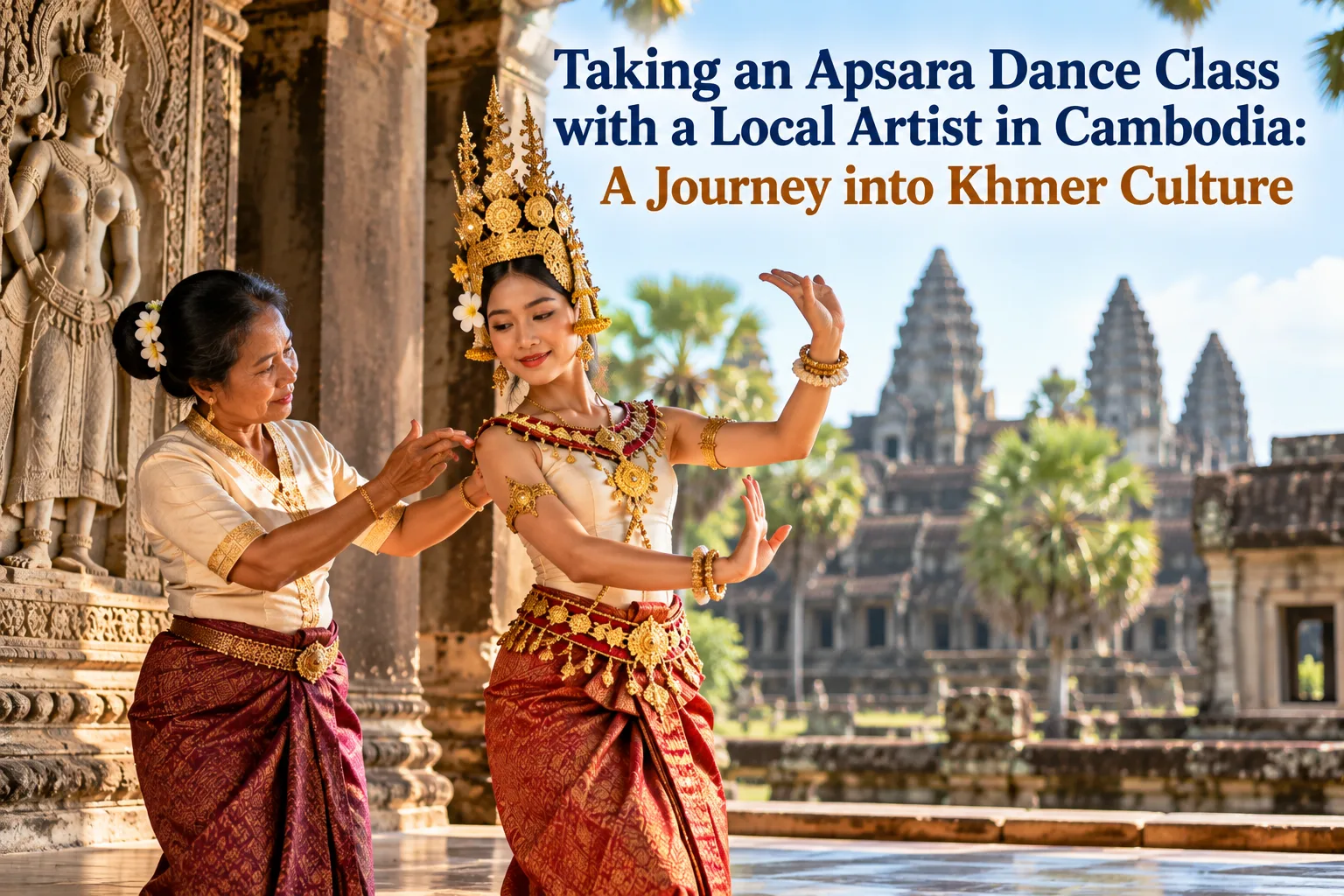
Taking an Apsara Dance Class with a Local Artist in Cambodia
Few cultural experiences in Cambodia are as graceful and expressive as learning Apsara dance with a local artist. Known for its elegant hand gestures, precise movements, elaborate costumes, and connection to Khmer history, Apsara dance offers travelers a unique way to experience Cambodian culture from the inside.
Instead of simply watching a traditional performance, joining a class allows you to try the movements yourself. Under the guidance of a local dancer, you can learn how the hands, fingers, feet, posture, and facial expressions work together to create the distinctive language of Khmer classical dance.
It may look effortless on stage, but a beginner quickly discovers just how much concentration and practice are required.
What Is Apsara Dance?


Apsara dance is a form of Cambodian classical dance inspired by the celestial dancers known as apsaras in Hindu and Buddhist traditions.
The imagery of apsaras is especially famous at Angkor Wat, where hundreds of carved figures decorate the temple walls. These graceful figures have become one of the most recognizable artistic symbols of Cambodia.
Cambodian classical dance developed into a highly refined performance tradition, with movements carefully taught and preserved across generations.
The dance is not simply about beautiful poses. Every gesture can contribute to the storytelling, symbolism, and emotional expression of a performance.
Learn From a Local Cambodian Artist


The most rewarding part of an Apsara dance class in Cambodia is learning directly from someone who understands the tradition.
A local artist can explain not only how to perform a movement but also why it matters.
Your instructor may demonstrate a gesture slowly before asking you to repeat it. They may correct the position of your hands, elbows, shoulders, or feet and explain how to maintain the characteristic elegance of the dance.
For beginners, the process can be surprisingly challenging.
The fingers need to be positioned carefully. The wrists must remain controlled. The body posture has to stay upright and graceful. Even a simple movement can require considerable coordination.
Discover the Language of Hand Gestures
One of the most distinctive features of Khmer classical dance is its intricate use of the hands and fingers.
The curved fingers and carefully controlled wrist movements create recognizable shapes that contribute to the visual storytelling.
During a beginner-friendly class, you may learn several basic hand positions and practice moving smoothly between them.
At first, your hands may feel stiff or unnatural. After repeated practice, however, the movements begin to feel more fluid.
This is one of the most enjoyable parts of the experience: realizing how much discipline is hidden behind the apparently effortless movements of professional dancers.
Practice Traditional Apsara Movements
A typical introductory lesson may include basic movements inspired by Khmer classical dance.
You might practice:
Hand and finger positions
Gentle wrist movements
Arm placement
Traditional standing poses
Slow walking patterns
Coordinated foot movements
Facial expression and eye focus
Simple sequences combining several gestures
The instructor usually demonstrates each movement before allowing students to practice.
Do not worry about getting everything right immediately. Apsara dance is a highly developed art form, and professional performers train for years.
The goal of a short travel workshop is not to become a professional dancer. It is to gain a deeper appreciation for the skill, patience, and cultural knowledge behind the performance.
Understand the Stories Behind the Dance
A good Apsara dance workshop in Cambodia should introduce you to more than physical movements.
Traditional Khmer dance is closely connected with Cambodian history, mythology, religion, and storytelling.
Your instructor may explain the meaning of particular gestures or introduce characters represented through dance.
This context changes the way you watch a performance afterward. Instead of seeing only beautiful costumes and graceful movements, you begin to recognize details in posture, gestures, and expression.
That deeper understanding is one of the most valuable outcomes of taking a cultural class.
Experience Traditional Costumes
In some workshops, participants may have the opportunity to try elements of traditional dance costumes.
Professional Apsara costumes can be elaborate, featuring decorated headdresses, jewelry, fitted garments, and ornate accessories.
The costume is not merely decorative. It contributes to the visual identity of the character and helps create the distinctive appearance of Khmer classical dance.
If a workshop provides costume experiences, treat the clothing and accessories carefully and follow the instructor's guidance.
Combine the Class With a Visit to Angkor
For travelers staying in Siem Reap, an Apsara dance class can be combined beautifully with a visit to the Angkor archaeological area.
After seeing apsara figures carved into ancient temple walls, learning some of the dance movements provides a fascinating modern connection to Cambodia's artistic heritage.
At Angkor Wat and other temples, visitors can encounter numerous celestial dancer carvings. Seeing these images first and then discussing their cultural significance with a local dancer can make the experience feel much more connected.
It is a wonderful example of how Cambodia's ancient artistic heritage continues to inspire living cultural traditions.
Meet Cambodia Through Performing Arts
Travelers often experience Cambodia through food, temples, markets, and landscapes. Performing arts offer another way to understand the country.
An Apsara dance class with a local artist creates an opportunity for direct cultural exchange.
You are not simply consuming a performance. You are participating, asking questions, making mistakes, laughing, practicing, and learning.
That interaction can create a stronger connection than simply sitting in an audience.
Tips for Joining an Apsara Dance Class
To make your experience more enjoyable, keep a few things in mind:
Wear comfortable clothing that allows you to move freely.
Listen carefully to your instructor's corrections.
Be patient with the hand movements. They can be surprisingly difficult.
Ask about the cultural meaning behind the gestures.
Ask permission before photographing dancers or instructors.
Respect traditional costumes and accessories.
Avoid treating sacred or cultural gestures as jokes.
Choose workshops that work directly with local artists or cultural organizations.
Most importantly, approach the class with curiosity rather than expecting to master the dance in one session.
Why This Is a Unique Cambodian Travel Experience
An Apsara dance class offers something that conventional sightseeing cannot.
You leave with more than photographs. You leave with a physical understanding of how carefully controlled movements can communicate stories and emotions.
You also gain a greater appreciation for Cambodian artists who continue to preserve and teach an important part of Khmer cultural heritage.
For visitors who enjoy hands-on cultural experiences in Cambodia, this is an excellent way to spend an afternoon or evening.
Final Thoughts
Taking an Apsara dance class with a local artist in Cambodia is a memorable way to connect with Khmer culture through movement, storytelling, and human interaction.
From learning delicate finger positions to practicing graceful poses, every step reveals the extraordinary discipline behind this beautiful tradition.
You may not leave the class dancing like a professional, but you will almost certainly watch Apsara performances differently afterward.
The next time you see a dancer raise her hands in an elegant curve or hold a seemingly impossible finger position, you will understand that behind that graceful moment are years of training, cultural knowledge, and dedication.
For travelers searching for an authentic cultural experience in Cambodia, stepping into an Apsara dance class is a beautiful way to move beyond sightseeing—and briefly become part of the living tradition yourself.