Visiting a Mountain Apple Orchard in Bhutan: Discovering Himalayan Agriculture, Local Traditions, and Rural Life
Bhutan is famous for its majestic Himalayan mountains, peaceful monasteries, traditional villages, and breathtaking natural landscapes. Beyond these well-known attractions, the country also offers fascinating rural exper...
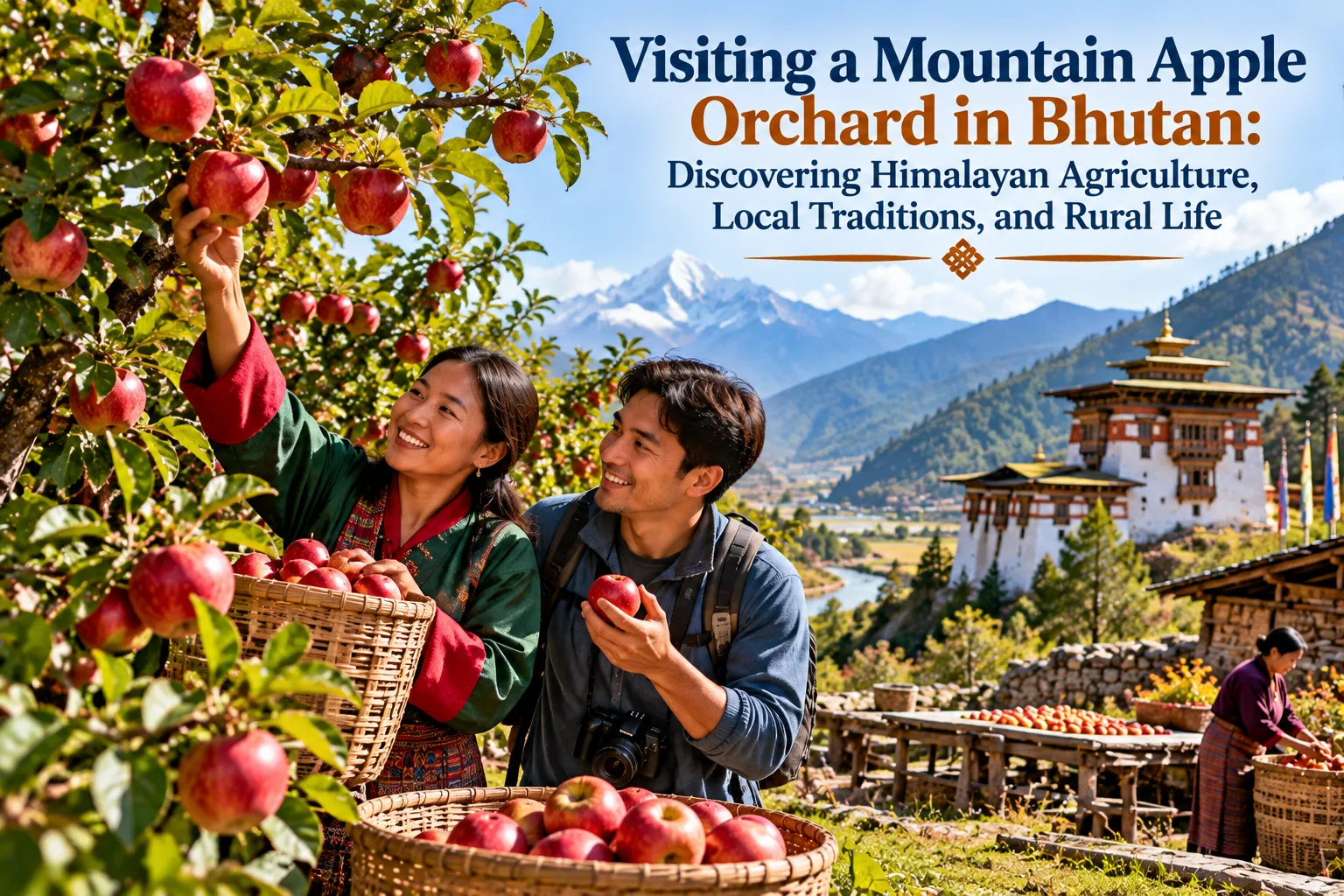
Visiting a Mountain Apple Orchard in Bhutan: Discovering Himalayan Agriculture, Local Traditions, and Rural Life
Bhutan is famous for its majestic Himalayan mountains, peaceful monasteries, traditional villages, and breathtaking natural landscapes. Beyond these well-known attractions, the country also offers fascinating rural experiences that allow travelers to discover its agricultural heritage. One of the most rewarding is visiting a mountain apple orchard, where visitors can explore fruit-growing traditions, meet local farmers, and enjoy the beauty of Bhutan's countryside.
Visiting a mountain apple orchard in Bhutan provides a unique opportunity to experience the connection between nature, agriculture, and community life. From walking beneath apple trees to learning about harvesting techniques and tasting freshly picked fruit, this experience offers a refreshing alternative to conventional sightseeing.
Whether you are interested in sustainable tourism, local food, or authentic cultural encounters, exploring Bhutan's mountain orchards can become a memorable part of your Himalayan adventure.
1. Discover Bhutan’s Mountain Apple-Growing Regions

Bhutan's apple orchards offer a distinctive combination of agricultural heritage and Himalayan scenery. Fruit trees grow on mountain slopes and valley floors, where cool conditions and suitable elevations support apple cultivation.
Paro and Thimphu are among Bhutan's major apple-growing regions, while Haa and Bumthang also have apple orchards. Many growing areas sit at elevations of approximately 2,000–2,600 meters above sea level.
A visit to an orchard can reveal how farmers manage fruit trees in a mountainous environment, where weather, terrain, and seasonal conditions influence their work.
Travelers may see rows of apple trees, farmers tending branches, fruit being sorted after picking, and small farm buildings set against dramatic mountain scenery.
For visitors interested in rural life, the experience offers a different perspective on Bhutan beyond its monasteries, dzongs, and trekking routes.
2. Experience Apple Picking During the Harvest Season
One of the most enjoyable ways to explore a mountain apple orchard in Bhutan is to visit during the harvest season. The main apple harvest generally takes place from August to October, although exact timing varies according to the variety, altitude, and local weather.
During this period, the orchards become busy with farmers gathering ripe fruit, checking its quality, and preparing apples for local markets or distribution.
If the orchard owner permits visitors to participate, you may have the opportunity to:
Learn how farmers determine when apples are ready to pick.
Observe careful harvesting techniques that help prevent bruising.
Discover how apples are sorted according to size and quality.
See how harvested fruit is packed into baskets or crates.
Talk with farmers about the challenges of growing fruit in the Himalayas.
Apple picking is not automatically available at every orchard. Contact the farm beforehand to confirm whether visitors are welcome and whether harvesting activities will be taking place during your visit.
Even when picking is unavailable, observing the work of local farmers can provide valuable insight into Bhutan's agricultural traditions.
3. Meet Local Farmers and Learn About Mountain Agriculture
A guided orchard visit is an opportunity to meet the people who care for the trees throughout the year. Apple cultivation requires attention to pruning, watering, soil management, pest control, and seasonal weather conditions.
Farmers in Bhutan often work with steep terrain and changing mountain conditions. Their knowledge of local growing environments plays an important role in maintaining productive orchards.
During a visit, ask your host about the apple varieties grown on the property, how the trees are maintained, and how the harvest contributes to the household's income.
You may also learn about the difficulties farmers face, including plant diseases, labor requirements, changing weather, and the challenge of finding profitable markets. Recent reporting from Bhutan has highlighted concerns about apple yields and returns for growers.
These conversations can make an orchard visit more meaningful than a simple sightseeing stop. They reveal the work, knowledge, and uncertainty behind the fruit that eventually reaches local markets.
4. Discover Traditional Apple Products and Local Flavors

Bhutan's apples are used for more than fresh fruit sales. Depending on the producer and the season, apples may also be processed into juice and other products, helping farmers make use of their harvest.
At an orchard or nearby processing facility, visitors may be able to sample fresh apples, taste locally produced juice, or learn how fruit is prepared for sale.
Ask your host which products are made locally rather than assuming every farm offers the same selection. Some orchards focus mainly on fresh fruit, while others may sell processed products or supply fruit to commercial processors.
This part of the experience can be particularly rewarding for food enthusiasts who want to understand how local agriculture connects with Bhutan's food economy.
If you purchase products directly from farmers, you can support local businesses while taking home a small reminder of your visit.
5. Enjoy the Himalayan Scenery Around Bhutan's Apple Orchards

Beyond the agricultural experience, mountain apple orchards provide beautiful settings for photography and gentle countryside walks.
In Paro, orchards can be explored alongside the valley's traditional villages and mountain views. A visit can also complement a cultural itinerary that includes historic architecture and monasteries.
Thimphu offers another opportunity to discover apple-growing areas while staying close to the capital. Travelers exploring central Bhutan may also find orchards in Bumthang, although availability and farm access vary.
During your visit, take time to appreciate the contrast between the orderly rows of fruit trees, traditional farm buildings, terraced slopes, and distant mountain ridges.
Follow the owner's guidance when walking through an orchard, avoid damaging branches, and ask before photographing private homes or farm activities.
6. Practical Tips for Planning an Apple Orchard Visit in Bhutan
A little preparation will help you enjoy the experience while respecting local farmers and their property.
Choose the right season: August to October is generally the main apple harvest period, but confirm local conditions before traveling.
Arrange your visit in advance: Ask a local guide, accommodation provider, or farm owner about orchards that welcome visitors.
Wear suitable footwear: Orchard paths may be uneven, muddy, or steep, particularly after rain.
Dress in layers: Mountain temperatures can change throughout the day, so bring clothing suitable for the altitude and season.
Bring a reusable water bottle: Stay hydrated while walking outdoors.
Ask before picking fruit: Only harvest apples when the owner has explicitly invited you to participate.
Support local producers: Consider purchasing apples, juice, or other products directly from the farm when available.
Keep your itinerary flexible: Harvest schedules depend on weather and crop conditions, so a farm may not offer picking activities on a particular day.
Final Thoughts
Visiting a mountain apple orchard in Bhutan offers a refreshing way to discover the country's rural landscapes, agricultural traditions, and local livelihoods.
From watching farmers harvest ripe apples to learning about mountain growing conditions and tasting locally produced fruit, the experience provides an intimate glimpse into everyday life in the Himalayas.
Paro and Thimphu are especially relevant destinations for travelers interested in apple cultivation, while other regions offer additional opportunities to explore Bhutan's agricultural diversity.
For the most rewarding experience, arrange your visit directly with a welcoming farm or through a knowledgeable local guide. Be prepared for seasonal variations, respect the work of farmers, and take time to appreciate the landscape surrounding the orchard.
If you are seeking an authentic rural experience beyond Bhutan's famous monasteries and mountain trails, visiting a mountain apple orchard in Bhutan is a wonderful way to connect with local agriculture, traditional hospitality, and the natural beauty of the Himalayas.