Visiting Ban Baat: Discovering Bangkok’s Traditional Alms Bowl Craft Village
Visiting Ban Baat: A Journey Into Traditional Thai CraftsmanshipHidden among the busy streets of Bangkok is Ban Baat, a historic community famous for making traditional metal alms bowls used by Buddhist monks. While Bang...
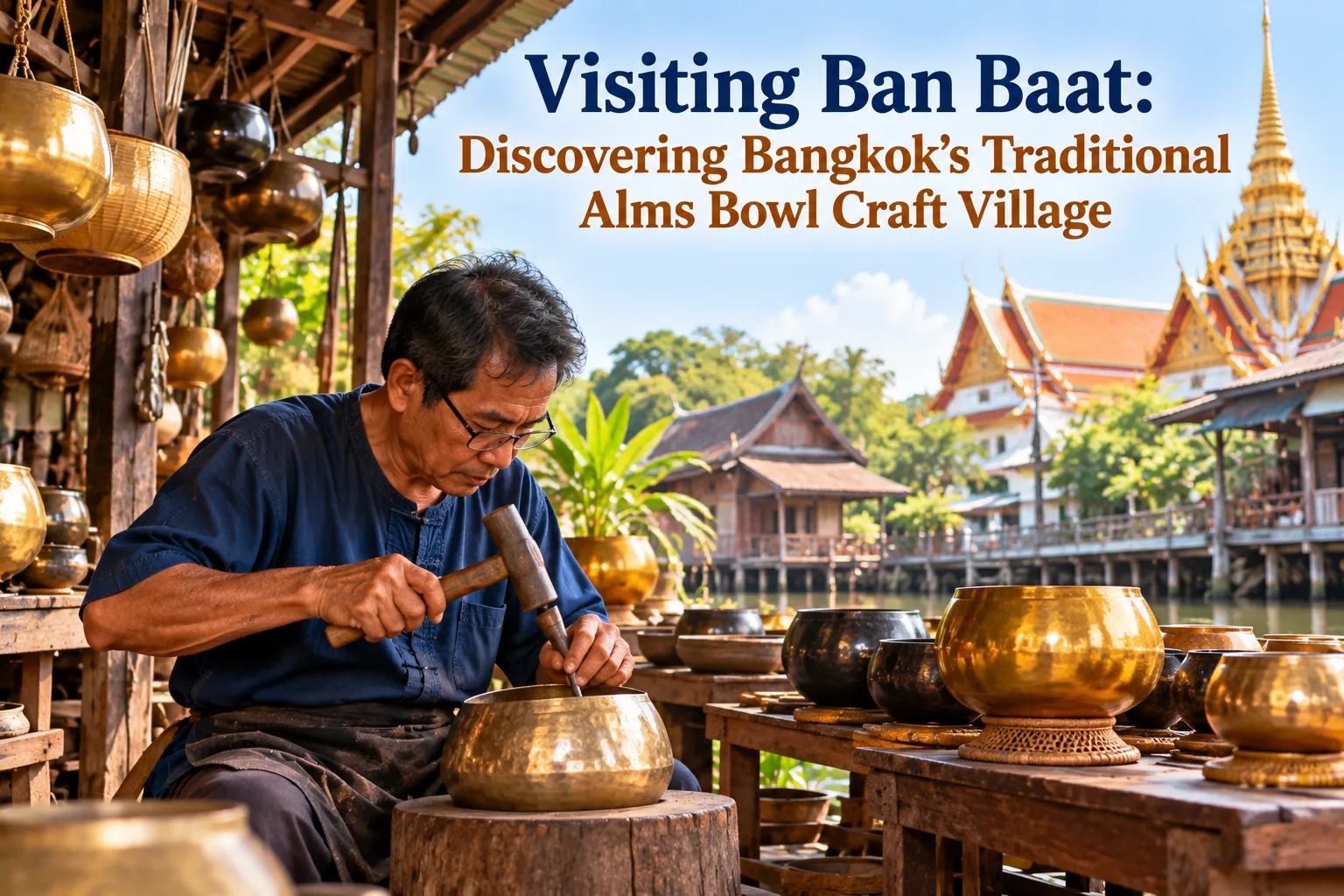
Visiting Ban Baat: A Journey Into Traditional Thai Craftsmanship
Hidden among the busy streets of Bangkok is Ban Baat, a historic community famous for making traditional metal alms bowls used by Buddhist monks. While Bangkok is often associated with grand temples, floating markets, street food, and modern shopping districts, Ban Baat offers a much quieter cultural experience.
Visiting this neighborhood gives travelers the opportunity to discover a traditional craft that has been passed down through generations. Inside small workshops, artisans carefully shape, join, hammer, and polish metal to create the distinctive bowls used during Buddhist alms-giving.
For travelers interested in authentic cultural experiences in Bangkok, Ban Baat provides an opportunity to see craftsmanship at a human scale.
What Is Ban Baat?


Ban Baat, also written as Ban Bat, is a traditional artisan community in Bangkok's historic area. The community is particularly associated with handmade alms bowls, known in Thai as บาตร (bat).
The bowls are connected with the Buddhist practice of monks receiving food offerings from laypeople. Rather than being mass-produced souvenirs, traditionally made bowls represent a specialized form of metal craftsmanship.
Walking through Ban Baat allows visitors to see workshops where artisans continue working with traditional techniques, although the community has become much smaller than it once was.
Discover the Art of Making Buddhist Alms Bowls
The most fascinating part of visiting Ban Baat alms bowl village is learning how a bowl is created.
Traditional bowls are assembled from several pieces of metal. Artisans shape these pieces, join them together, and hammer the surface repeatedly to strengthen and refine the form.
This process requires patience and considerable skill.
The repeated sound of metal being hammered is one of the most distinctive elements of a traditional workshop. Unlike factory production, handmade work allows each artisan to control the shape and finish of the bowl.
The process may include several stages:
Preparing metal sheets or components.
Cutting and shaping individual pieces.
Joining the pieces together.
Hammering the metal to strengthen and form the bowl.
Smoothing and polishing the surface.
Applying the final finish.
Watching these steps helps visitors understand why traditionally made alms bowls are valued as examples of Thai handicraft.
Meet the Artisans of Ban Baat


One of the best reasons to visit Ban Baat is the opportunity to see craftspeople at work.
The workshops are generally small, which creates an intimate atmosphere. You may see an artisan concentrating on a piece of metal while another person works on polishing or finishing a bowl.
If you have the opportunity to speak with local craftspeople, ask about the techniques they use and how they learned the trade. Traditional knowledge is often passed from older generations to younger family members.
These conversations can reveal an important part of Bangkok's history that is easy to miss when visiting the city's major attractions.
Understand the Buddhist Connection
The alms bowl has a practical and spiritual role in Theravada Buddhism, which is practiced widely in Thailand.
Monks traditionally receive food and other necessities from laypeople rather than earning a conventional income. The daily alms round allows members of the community to make offerings and practice generosity.
The bowl therefore has meaning beyond its physical form.
For travelers, understanding this context makes a visit to Ban Baat more meaningful. You are not simply looking at a handmade metal object; you are learning about an item connected with religious practice, community relationships, and everyday Buddhist life.
Combine Ban Baat With Bangkok’s Historic Temples
Ban Baat is located in Bangkok's historic core, making it convenient to combine a visit with other cultural attractions.
After exploring the craft community, consider visiting nearby historic temples and neighborhoods. The area around the old city provides opportunities to discover traditional architecture, markets, canals, and local food.
A walking itinerary combining Ban Baat and Bangkok's temples can provide a deeper understanding of how craftsmanship, religion, and everyday life have developed alongside one another.
Rather than rushing between famous landmarks, spend time exploring the smaller streets and observing the details.
Experience a Different Side of Bangkok
Bangkok can sometimes feel overwhelming.
There are traffic jams, crowded markets, huge shopping centers, bright signs, and busy tourist attractions. Ban Baat offers a completely different atmosphere.
The neighborhood is quieter and more intimate. Instead of watching a large cultural performance, you can observe a real craft being practiced in a small workshop.
That contrast is precisely what makes the experience memorable.
Visiting Ban Baat allows travelers to slow down and discover a lesser-known piece of Bangkok's cultural heritage.
Photography and Responsible Tourism
Traditional workshops can be fascinating subjects for photography, but visitors should always be respectful.
Before photographing an artisan or entering a workshop, ask permission. Avoid touching tools, materials, or unfinished bowls unless invited to do so.
Keep in mind that these workshops are workplaces rather than staged attractions. A respectful visitor observes without interrupting the craftsman's concentration.
If the community offers handmade products for sale, purchasing directly from artisans can also provide practical support for traditional craftsmanship.
When to Visit Ban Baat
The best time to explore Ban Baat is generally during the daytime when artisans are working.
Because the community consists of working workshops rather than a conventional museum, opening times can vary. It is sensible to confirm access before making a special journey.
A morning visit can be particularly pleasant because Bangkok is typically cooler and quieter than during the afternoon.
Combining the visit with nearby temples and historic neighborhoods can turn the experience into a rewarding half-day cultural walk.
What Makes Ban Baat Special?
Several things make Ban Baat alms bowl village worth discovering:
Traditional craftsmanship: See handmade metalwork techniques rarely encountered in modern cities.
Living heritage: Discover a craft connected with Bangkok's historic communities.
Buddhist culture: Learn about the role of alms bowls in monastic life.
Local interaction: Meet artisans and hear about their work.
Authentic atmosphere: Experience a working neighborhood rather than a conventional tourist attraction.
Cultural photography: Capture tools, textures, workshops, and historic streets—with permission.
Most importantly, the visit encourages travelers to appreciate the people behind traditional objects.
Tips for a Meaningful Visit
To get the most from your experience:
Research the community before arriving.
Visit during working hours.
Ask permission before taking photographs.
Dress appropriately when combining the visit with temple sightseeing.
Do not handle tools or unfinished work without permission.
Consider buying directly from local artisans.
Be patient—the workshop experience is about observing craftsmanship rather than rushing through an attraction.
Respect the community as a living neighborhood.
Final Thoughts
Visiting Ban Baat in Bangkok is a fascinating way to discover Thailand's traditional craftsmanship and Buddhist heritage. Behind the simple appearance of a metal alms bowl lies a detailed process requiring patience, precision, and generations of knowledge.
For travelers looking for unique cultural experiences in Thailand, Ban Baat offers an opportunity to step away from Bangkok's famous tourist routes and encounter a quieter side of the city.
Listen to the rhythm of the hammer, watch the artisans shape the metal, learn about the Buddhist tradition behind the bowls, and take a moment to appreciate the skill involved in preserving an old craft.
In a rapidly changing Bangkok, communities like Ban Baat provide a valuable connection to the city's living heritage—one carefully crafted bowl at a time.