Visiting Bethlehem Craft Workshops: Discover Palestine’s Living Artisan Heritage
IntroductionA visit to Bethlehem is not complete without discovering the city's remarkable tradition of handmade crafts. Beyond its famous religious landmarks, Bethlehem is home to generations of artisans who transform o...
Visiting Bethlehem Craft Workshops: Discover Palestine’s Living Artisan Heritage
Introduction
A visit to Bethlehem is not complete without discovering the city's remarkable tradition of handmade crafts. Beyond its famous religious landmarks, Bethlehem is home to generations of artisans who transform olive wood, mother-of-pearl, ceramics, textiles, and other materials into beautiful works of art.
For travelers, visiting a Bethlehem craft workshop offers a more personal way to experience Palestinian culture. Instead of simply buying a souvenir, you can watch artisans work, learn about techniques passed down through generations, and understand the stories behind the objects displayed in local workshops and stores.
Bethlehem's handicraft traditions are particularly associated with olive-wood carving and mother-of-pearl work, industries that developed closely alongside the city's long history as a destination for Christian pilgrims.
Why Visit Bethlehem Craft Workshops?


Walking into a traditional workshop can feel very different from visiting a conventional souvenir shop.
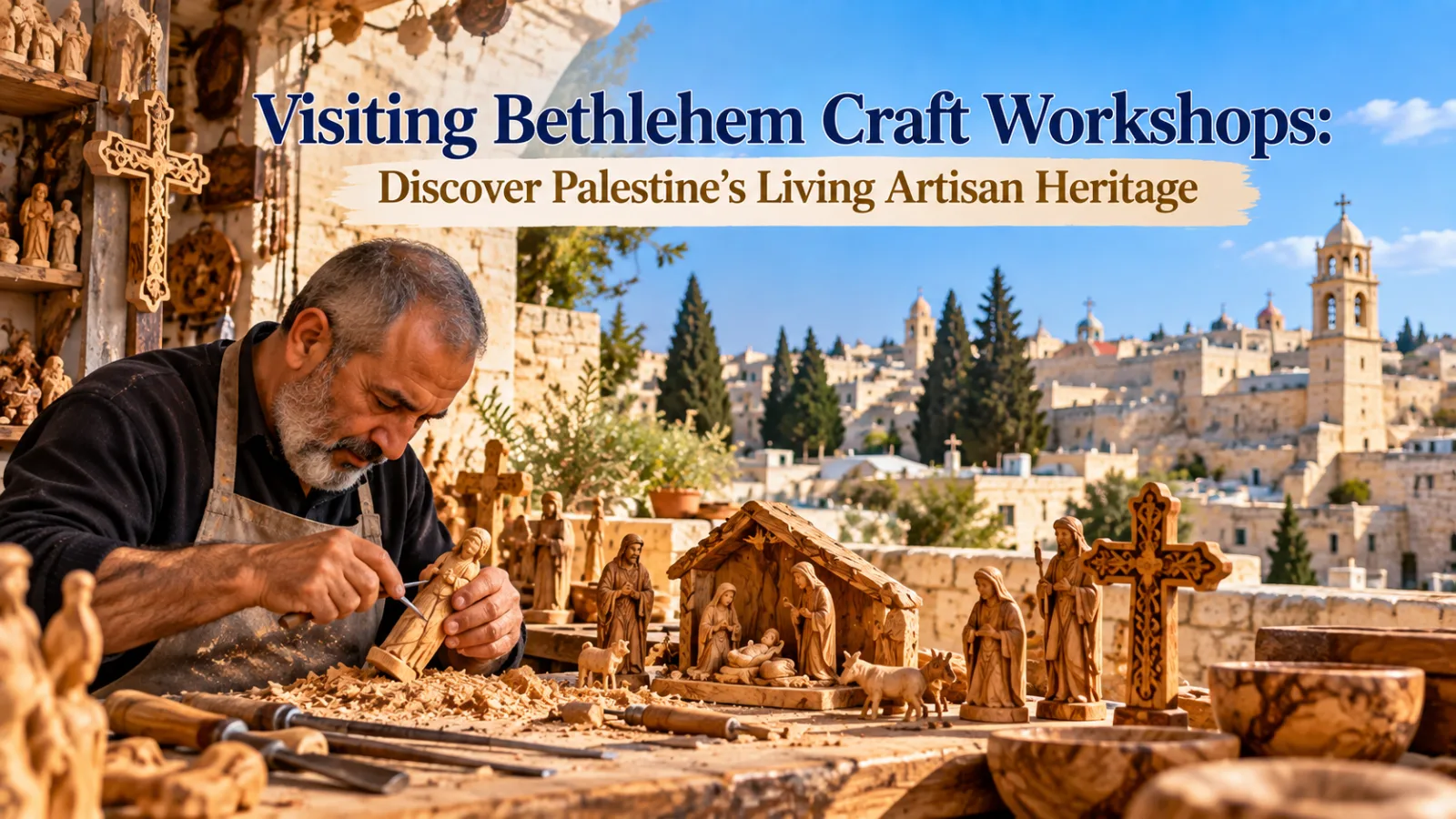
You may hear carving tools working against wood, see piles of sawdust surrounding a workbench, or watch an artisan carefully shaping a tiny religious figure by hand.
Bethlehem's craft sector includes olive wood, mother-of-pearl, ceramics, embroidery, candles, wool, recycled materials, and other handmade products. The Bethlehem Fair Trade Artisans network, for example, brings together workshops and cooperatives working in several of these traditional crafts.
A workshop visit allows travelers to:
Watch artisans demonstrate traditional techniques.
Learn about Palestinian craft heritage.
Meet local makers and families.
Purchase handmade products directly.
Discover the difference between handmade and mass-produced souvenirs.
Support local artisan livelihoods.
Discover Bethlehem's Famous Olive-Wood Carving


The most recognizable craft associated with Bethlehem is undoubtedly olive-wood carving.
The olive tree has deep cultural significance throughout Palestine, and Bethlehem's artisans have developed a distinctive tradition of turning olive wood into religious and decorative objects.
Traditional products include:
Nativity scenes
Crosses
Rosaries
Religious figures
Angels
Small animals
Boxes
Ornaments
Decorative plaques
Christmas decorations
The Bethlehem Museum notes that olive-wood crafting has been passed through generations and remains an important part of the city's cultural heritage.
According to Palestinian tourism information, family workshops allow visitors to watch wood being cut, shaped, and carved into detailed objects.
Watch an Artisan at Work
One of the most rewarding parts of visiting a Bethlehem craft workshop is seeing the process behind the finished object.
A simple piece of olive wood can require multiple stages of preparation. Artisans select suitable wood, cut and shape it, remove unnecessary material, and gradually create the desired form.
The final details may require considerable patience.
Experienced carvers can create surprisingly intricate scenes from a relatively small piece of wood. Some workshops continue to emphasize hand carving, while others use modern tools alongside traditional craftsmanship.
The combination of old techniques and contemporary equipment allows Bethlehem's artisans to keep the tradition alive while responding to modern markets.
Explore Mother-of-Pearl Art
Another important Bethlehem tradition is mother-of-pearl carving.
This craft is particularly associated with religious souvenirs and decorative objects. Artisans use the naturally iridescent material to create crosses, boxes, plaques, jewelry, rosaries, and miniature religious objects.
Bethlehem University describes mother-of-pearl as a historically important Bethlehem handicraft and notes its development alongside the city's pilgrimage economy.
The tradition became particularly significant from the early modern period onward. Historical accounts and local museum materials connect the development of the craft with Franciscan influence and the steady arrival of pilgrims to Bethlehem.
Today, only a relatively small number of highly skilled artisans continue some of the more traditional forms of mother-of-pearl carving, making authentic examples especially interesting for visitors.
See How Religious Souvenirs Are Made
Bethlehem's identity as a major Christian pilgrimage destination has strongly influenced its handicrafts.
For centuries, visitors have wanted to take home something connected with their journey to the Holy Land. This created demand for objects representing Christian faith and Bethlehem's sacred landscape.
Traditional workshop products can include:
Nativity scenes
Crosses
Rosaries
Biblical figures
Miniature churches
Religious plaques
Bethlehem-themed ornaments
This connection between pilgrimage and handicrafts helped shape the city's artisan economy. The Bethlehem Museum describes the relationship between pilgrims, handicrafts, and the development of the city's olive-wood and mother-of-pearl industries.
For travelers, buying a handmade piece can therefore be more than purchasing a souvenir—it can be a way of carrying home a small piece of Bethlehem's artistic heritage.
Discover Palestinian Embroidery
Although olive wood and mother-of-pearl receive much of the attention, traditional Palestinian embroidery is another important craft to look for during a Bethlehem visit.
Embroidery appears in clothing, textiles, accessories, and decorative pieces, often featuring geometric motifs and regional patterns.
Bethlehem's wider handicraft sector includes women's groups and cooperatives involved in embroidery and textile production.
Visiting a cooperative or artisan center can provide a different perspective on Bethlehem's craft traditions, particularly the role of women in preserving and adapting traditional textile skills.
Explore Ceramics and Other Handmade Crafts
A Bethlehem craft tour does not have to focus exclusively on religious souvenirs.
Local artisan networks also include:
Ceramics
Glass
Basketry
Jewelry
Wool and felt products
Olive-oil soap
Candles
Recycled-paper products
Recycled glass
The Bethlehem Fair Trade Artisans initiative specifically brings together a variety of these crafts and aims to help Palestinian producers reach wider markets.
This diversity makes a workshop visit an excellent opportunity to discover contemporary Palestinian creativity alongside older traditions.
Meet the Families Behind the Crafts
One of the most meaningful aspects of Bethlehem's handicraft tradition is its family-based character.
Many workshops have passed skills from one generation to another. The Holy Land Handicraft Cooperative Society, founded in 1981, represents workshop owners and artisans working in olive wood, mother-of-pearl, and related crafts.
Individual workshops also demonstrate this continuity. For example, the cooperative's information describes Bethlehem Handicrafts as a family business whose carving skills have been passed from father to son across generations.
When visiting a workshop, take time to ask about its history. The story of the family can be just as interesting as the object itself.
Where to Experience Bethlehem's Craft Traditions
Bethlehem and the neighboring communities of Beit Sahour and Beit Jala form an important center for traditional handicrafts.
The Bethlehem Museum highlights Bethlehem, Beit Jala, and Beit Sahour as key areas for olive-wood and mother-of-pearl production.
Travelers may encounter workshops, cooperatives, artisan centers, and specialized stores around the Bethlehem area.
If your goal is to see craftsmanship rather than simply shop, look for places that offer:
Demonstrations
Direct contact with artisans
Information about materials
Handmade products
Family histories
Fair-trade or cooperative initiatives
A workshop visit arranged through a local guide can also make it easier to understand the techniques and cultural background.
How to Choose an Authentic Bethlehem Handicraft
With so many souvenirs available, it can be difficult to know what is genuinely handmade.
When purchasing an item, consider asking:
Who made it?
A workshop should be able to explain where the piece was produced.
What material was used?
Ask whether the item is genuine olive wood, mother-of-pearl, ceramic, or another material.
Is it handmade?
Some products may involve machines or modern production techniques, while others are individually carved.
Where was it made?
Look for information about Bethlehem or nearby Palestinian communities.
Does the purchase support local artisans?
Cooperatives and fair-trade organizations can provide a more transparent purchasing option.
The Bethlehem Fair Trade Artisans initiative emphasizes handmade production, local materials, quality control, and fair-trade principles.
Responsible Shopping in Bethlehem
Buying directly from artisans can be a meaningful way to support traditional crafts, but responsible shopping goes beyond simply spending money.
Choose quality over quantity.
A small handmade carving produced by an artisan can be more meaningful than a suitcase full of mass-produced souvenirs.
When possible:
Buy directly from workshops.
Ask about the maker.
Choose genuinely handmade products.
Respect artisans' working spaces.
Ask before photographing people.
Avoid bargaining aggressively over carefully crafted work.
Consider fair-trade cooperatives.
Pack fragile crafts carefully for travel.
The goal is to make your purchase part of a positive cultural exchange.
Best Time to Visit Bethlehem Craft Workshops
Unlike outdoor attractions, workshops can generally be enjoyed throughout the year.
However, opening hours vary between individual businesses and artisan centers. During major religious holidays and pilgrimage periods, Bethlehem can become particularly busy.
For a quieter experience, consider visiting earlier in the day and allowing plenty of time to speak with artisans.
If you want to watch a specific craft demonstration, contact the workshop beforehand rather than assuming a demonstration will be available.
A Perfect Bethlehem Craft Experience
A memorable craft-focused day in Bethlehem could begin with a visit to the historic center and Church of the Nativity, followed by a walk through local streets and artisan areas.
Next, step inside an olive-wood workshop and watch a craftsman transform a piece of wood into a detailed figure or Nativity scene.
Continue to a mother-of-pearl workshop to see how shimmering shell material becomes a decorative cross, box, or religious object.
After lunch, visit an artisan cooperative to discover embroidery, ceramics, textiles, or other Palestinian crafts.
Finally, choose one meaningful handmade object to take home.
Instead of simply remembering Bethlehem through photographs, you leave with something made by human hands and connected to the city's living heritage.
Final Thoughts
Visiting Bethlehem craft workshops offers a fascinating window into Palestinian culture, craftsmanship, faith, and family traditions.
From the warm tones and natural grain of olive wood to the shimmering surfaces of mother-of-pearl and the intricate patterns of Palestinian embroidery, each craft tells a story.
The experience becomes even more meaningful when you meet the artisans themselves and learn how their skills have been passed from generation to generation.
For travelers looking for an authentic cultural experience, Bethlehem's workshops offer much more than souvenirs. They provide an opportunity to see traditional craftsmanship alive, support local makers, and take home a tangible connection to Bethlehem.
Whether you choose a small olive-wood carving, a piece of mother-of-pearl art, embroidered textile, or another handmade object, the most valuable souvenir may be the story behind it.